Category: Uncategorized
-
The Government Has Admitted the Current Framework “Does Not Prevent Worker Exploitation and Leaves Vulnerable Workers without Core Employment Protections.”

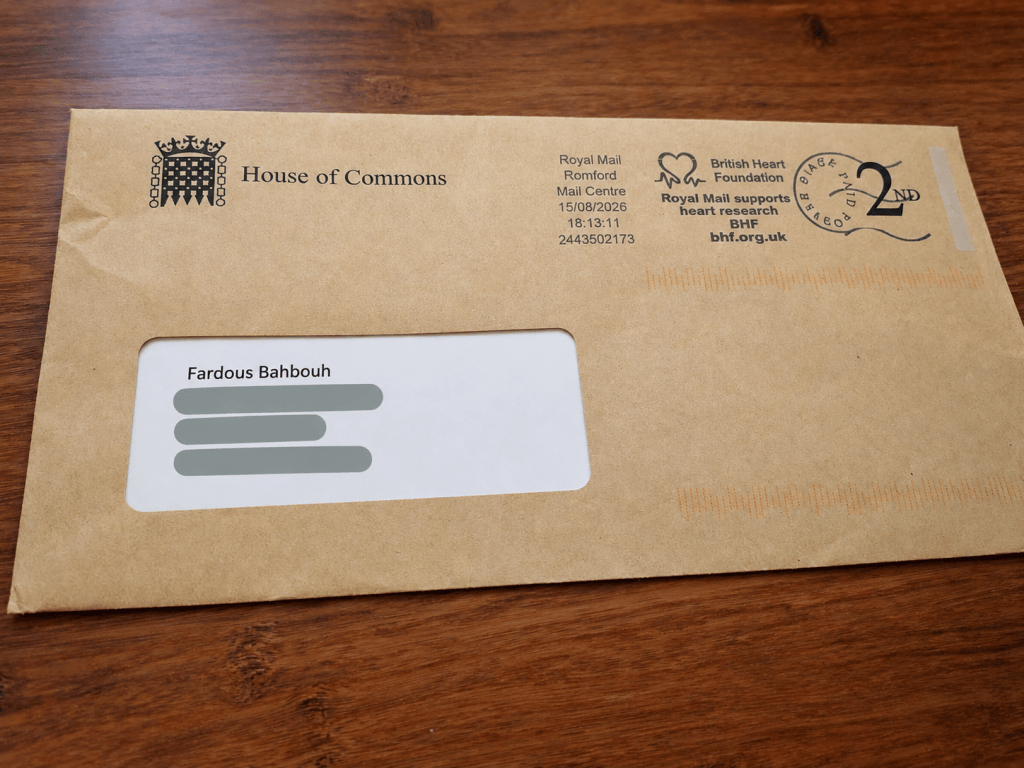
I received a ministerial reply from the Cabinet Office in response to concerns I raised about public supply chains, outsourcing, equality obligations, and precarious labour arrangements affecting interpreters and other workers in publicly funded services. A copy of the correspondence is included at the end of this article. The response was issued following my open…
-
10 Concrete Practice-Oriented Changes ITI Can Implement: Moving Beyond Adaptation Toward Labour-Conscious Institutional Framing

This article sets out a series of concrete, practice-oriented changes that the Institute of Translation and Interpreting (ITI) could implement in order to engage more directly with the structural labour conditions affecting translators and interpreters. It builds on my earlier article, Theory of Change for the UK Translation and Interpreting Industry, and should be understood…
-
Theory of Change for the UK Translation and Interpreting Industry: Repoliticising Labour Precarity and Mapping Responsibility

Abstract This article proposes a theory of change for understanding and addressing persistent low pay and precarity in the translation and interpreting industry through the repoliticisation of translation labour. Building on my previous analyses of translators’ labour conditions, it argues that low pay is structurally produced through the organisation of the translation supply chain. Translation…
-
Translation for Whom? Is Translation an Ecosystem, a Collaborative Community, a Profession, a Precarity Trap, or a Site of Exploitation?

Translators and interpreters are specialists whose work revolves around words, meaning, context, nuance, and intention. We spend our professional lives analysing how language frames reality, shapes relationships, legitimises power, and influences how people understand the world. We know that words are never neutral; the terms we choose carry assumptions, values, and political implications. It is…
-
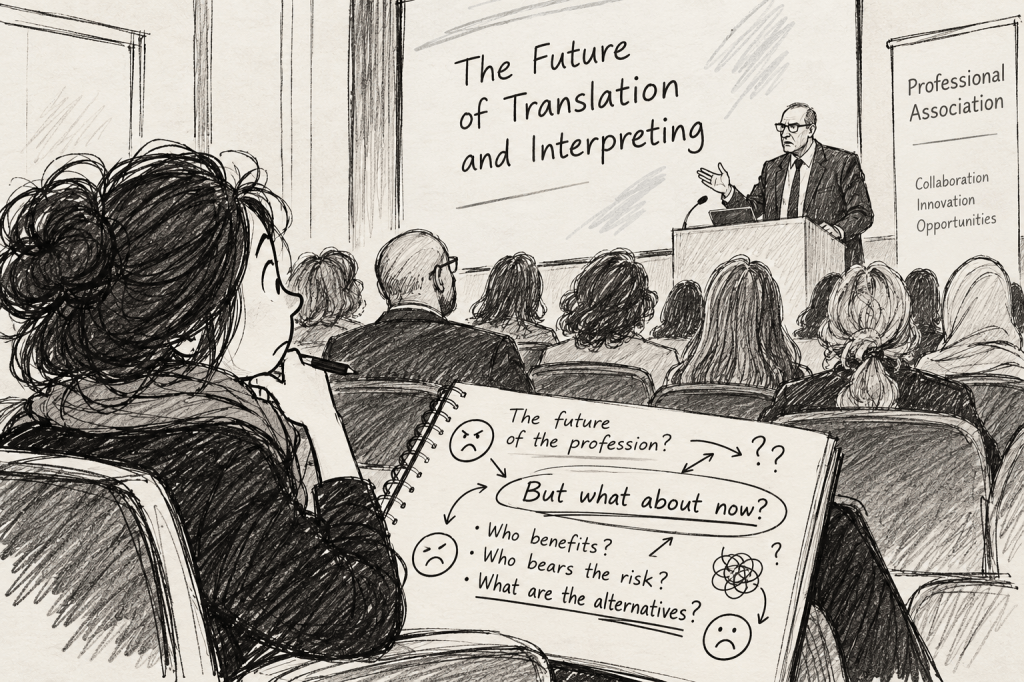
Should Translators Pay to Play “Happy Community” with LSPs While Exploitation and Precarity Go Unaddressed? Urgent Changes Needed to ITI’s Conference

I am writing ahead of the Institute of Translation and Interpreting (ITI) conference because I believe meaningful change is still possible. My aim is not only to critique ITI, but to contribute to a discussion about what translators and interpreters urgently need from professional institutions at a time of intensifying precarity and labour insecurity, as…
-
Three UK Universities Deny Having a Partnership with the ATC: On the Ethical Duties to Scrutinise Industry Influence in Translation and Interpreting

Three UK universities have confirmed that they do not have a partnership with the ATC, the interest group representing language service providers (LSPs), despite the ATC claiming such partnerships on its website and in its promotional materials. Institutional relations deeply matter for discussions on exploitation and labour rights in the translation and interpreting industry, because…
-
What hope is there for translators when their intensifying financial insecurity is often depoliticised, even in The Guardian’s coverage?

I read with interest the Guardian’s recent article on AI and translation labour titled “‘Being human helps’: despite rise of AI is there still hope for Europe’s translators?” While I am grateful for an article that acknowledges worsening precarity, declining rates, and reduced workflows, I believe it still reproduces a depoliticised and problematic framing, presenting…
-
Is Professionalisation Rhetoric Contributing to a Precarity Trap for Translators and Interpreters?

There is a crisis across the translation and interpreting industry. An expanding body of academic research documents worsening working conditions across the profession: declining rates, fragmented work, weakening bargaining power, growing financial insecurity, and intensifying precarity. My own research shows that a large proportion of public service interpreters are struggling to earn enough to meet…
-
Are translators really lacking entrepreneurship skills? What is the problem represented to be?

When we read reports about the profession, whether in academic studies or professional association publications, there are often lists of entrepreneurship skills translators supposedly need to acquire: better negotiation, improved business strategy, more active marketing, or greater adaptability in a changing market. But there is a useful question we should ask whenever we encounter this…
-
Is the “Real Value” of ITI Membership Actually Negative? Professionalisation, Risk Transfer, and How Translation Labour Could Be Repoliticised

Like many questions that challenge established assumptions, I am aware this may be an uncomfortable one to ask. My aim in raising it is knowledge creation through a political economy analysis of membership organisations and translators’ labour. This article examines how institutional narratives, incentive structures, and representational arrangements shape what is made visible or invisible…
-
Academic Research Documents Intensifying Precarity Among Audiovisual Translators in Europe (Albeit with Some Attribution Weaknesses)

A recent academic study titled “Working Conditions of Audiovisual Translators in Europe” by A recent academic study titled “Working Conditions of Audiovisual Translators in Europe” by Kristijan Nikolić, Mirjana Tonković, and Jorge Díaz Cintas offers one of the clearest empirical snapshots to date of the growing insecurity affecting the profession. This article summarises the main…
-
Academic Research Documents Poor Job Quality and Intensifying Financial Insecurities Among UK Translators (Albeit with Theoretical and Analytical Weaknesses)

A recent academic study titled “Love’s Labour’s Found? A Data-Driven Exploration of Job Quality among UK-Based Freelance Translators” by JC Penet, Callum Walker and Joseph Lambert offers one of the clearest empirical snapshots to date of the deteriorating working conditions facing freelance translators in the UK. Many of the findings strongly resonate with my own…
-
Why Translators and Interpreters Are Often Poorly Paid: Corporate Power and Displaced Responsibility

One of the most striking observations from my three years of PhD research into the translation and interpreting industry is how little attention is paid to a basic question: why are translators and interpreters so often underpaid, and who is responsible? Across professional events, academic discussions, and institutional collaborations, these questions remain largely unaddressed. When…
-
Why Invoke “A More Joyful Life” While Many Linguists Struggle to Sustain One? An Open Letter to the Head of the Chartered Institute of Linguists

Dear John Worne, This as an open letter in response to your remarks during the event Studying Translation in the Age of AI, organised by the University of Surrey. It highlights serious concerns regarding the partial and potentially misleading account you presented of the translation and interpreting industry by reframing structural challenges—such as declining pay,…
-
When Representation Obscures Reality: An Open Letter to the Head of the Institute of Translation and Interpreting

(Please note that this article was written before I became aware that ITI somehow represents both individual translators and corporate members.) Dear Sara Robertson I am writing this as an open letter in response to your remarks during the Studying Translation in the Age of AI, where you presented an overly positive on AI as…
-
Studying Translation in the Age of AI: What Gets Said, What Gets Left Out

This is not a neutral reflection. It is a deliberate intervention. As an academic researcher, I once again feel compelled to speak out. Over the past few years, I have watched a particular narrative about the translation and interpreting industry take shape across academic publications, public events, and institutional collaborations. It is a narrative that…
-
This upcoming election, make ending exploitation within outsourced public services a top priority

As the UK prepares for the upcoming elections, an issue that deserves far greater public attention is the risk of exploitation within outsourced public service supply chains. Voters in Scotland and Wales will elect representatives to their national parliaments, while a number of local council and mayoral polls will take place in England. Across these…
-
The Role of Outsourcing, Digitalisation, Demographics, and Credentialism in diminishing negotiation power of PSI interpreters.

In the previous articles in this series, we explored how outsourcing, low pay, intensifying financial insecurities, deteriorating working conditions and digitalisation have reshaped Public Service Interpreting (PSI) in the UK. Many interpreters described being paid per minute or per second, or being expected to accept last-minute assignments under increasingly uncertain conditions, which some described as…
-
From Booking Apps to AI: Why Technological Change Is Intensifying Precarity in Outsourced Public Service Interpreting

In the previous parts of this series, I share insights from my PhD research at the University of Leeds on inequalities in the outsourced public service interpreting. In their responses to a national survey, interpreters described significant challenges affecting working conditions, pay, and professional stability in UK Public Service Interpreting (PSI). Survey findings highlighted widespread…
-
Working conditions in outsourced public service interpreting: meaningful work under market pressures

This third article in the series presents further findings from my PhD research at the University of Leeds on inequalities in outsourced public service interpreting (PSI) in the United Kingdom (UK). PSI is a state-mandated function grounded in legal obligations and funded through public resources. However, the delivery of these services is largely outsourced to…
-
Financial insecurity in UK public service interpreting: Excerpts from my PhD study

In the United Kingdom (UK), public service interpreting (PSI) is a state function mandated by legal frameworks and funded by taxpayers. However, its delivery is predominantly outsourced to private language service providers (LSPs), where interpreters’ labour is subject to market competition and cost-cutting logics. This study examines the inequalities experienced by interpreters in PSI through…
-
Who Is Responsible? Research Finds Critical Safety Gaps in Outsourced Public Service Interpreting

This article is the first part of a series presenting findings from my PhD research at the University of Leeds, which examines inequalities in outsourced public service interpreting (PSI) in the UK. The research combines an original national survey of interpreters with a multidimensional framework for analysing job quality, drawing on concepts from political economy,…
-
Urging the Government to publish its action plan to prevent exploitation within public supply chains: An open letter to the Secretary of State for Education and Minister for Women and Equalities, Bridget Phillipson MP

Dear Secretary of State, I am writing in response to the government’s recent announcement of employer action plans on the gender pay gap and menopause support, published ahead of International Women’s Day 2026. I welcome the recognition that women’s experiences at work continue to be shaped by structural inequalities, and I strongly support the aim…
-
Understanding the Rise of Attribution Bias in Translation Studies: Four structural reasons responsibility is increasingly misattributed in scholarly discussions of translators’ working conditions

There’s a pattern that keeps resurfacing in discussions about the translation industry—particularly around falling rates, worsening working conditions, and the increasing precarity of translators. The pattern is subtle, but deeply consequential and ethically problematic. It’s called attribution bias, and it is becoming increasingly common in translation industry studies. Attribution bias refers to the tendency to…
-
Would You Help a Fare Dodger on the London Underground?

I was exiting a Tube station in central London, and the station was relatively quiet. As I approached the exit gate, a young woman behind me asked if I could open the wider gate, pointing to the credit card in my hand. For a moment, I froze, surprised by the audacity of the request. My…
-
Spotting Ethical-Washing in the Translation Industry: Lessons from Greenwashing

By Fardous Bahbouh, Researcher & Consultant on Labour Rights, Public Policy, and the Political Economy of the Translation Industry Greenwashing is a well-established concept in environmental and corporate debates. It describes situations in which companies market themselves as ethically or environmentally responsible while their actual practices fall short. Classic examples include Volkswagen’s “clean diesel” scandal…
-
Good Translation Jobs Require Good Translation Companies: Why This Simple Logic Is Often Obscured — and Why Universities Must Remain Independent

By Fardous Bahbouh, Researcher & Consultant on Labour Rights, Public Policy, and the Political Economy of the Translation Industry Seriously, what comes to your mind when you hear the phrase “Better Together”? No, not the love song by Jack Johnson.Not the campaign for keeping Scotland in the UK.Not the UK’s debates to stay in the…
-
Universities Must Learn from the Epstein Scandals: Do Your Damn Due Diligence and Protect Whistle-blowers

By Fardous Bahbouh, Researcher & Consultant on Labour Rights, Public Policy, and the Political Economy of the Translation Industry We all know it: the system is wrecked, but that should never stop us from trying to fix it. Maybe nothing can ever measure up to the horror those girls and young women lived through. The…
-
We Need a Fair Translation Industry — Not Complicit Collaboration nor “Adaptability” to Exploitation

By Fardous Bahbouh, Researcher & Consultant on Labour Rights, Public Policy, and the Political Economy of the Translation Industry The translation and interpreting industry, and some academics, keep talking about adaptability, flexibility, and collaboration. But these buzzwords often mask a deeper problem: exploitation. What we need is fairness, not compliance to algorithms or precarious systems.…
-
Confronting Critical Blind Spots in Sustainability Discourse in Translation Studies: Advancing Ethical Labour Practices and Critiquing Profit-Driven Models

By Fardous Bahbouh, Researcher & Consultant on Labour Rights, Public Policy, and the Political Economy of the Translation Industry Introduction: Sustainability has become a widely endorsed and positively charged concept across translation industry studies, professional discourse, and policy debates. Yet closer examination reveals a paradox: while sustainability is frequently invoked, it is often operationalised through…
-
How much does the translation industry cost our society by underpaying its largely precarious workforce?

By Fardous Bahbouh, Researcher & Consultant on Labour Rights, Public Policy, and the Political Economy of the Translation Industry The translation and interpreting industry is frequently celebrated as a multi-billion-pound economic success story. Yet behind these impressive figures lies a far less comfortable truth. Drawing on research into working conditions across the sector, it becomes…
-
The Problem with Challenging Structural Problems: Confronting multiple Stakeholders and Navigating Emotional and Professional Risks

By Fardous Bahbouh, Researcher & Consultant on Labour Rights, Public Policy, and the Political Economy of the Translation Industry As I approach the completion of my research on inequality and the almost non-existent labour rights in outsourced public service interpreting, I have reached a difficult but important realisation: researching systemic problems can be lonely, emotionally…
-
Why Are Translators’ Rights Always Said to Be “Discussed Elsewhere”? Institutional Alignment with Commercial Interests as an Ethical and Strategic Failure

By Fardous Bahbouh, Researcher & Consultant on Labour Rights, Public Policy, and the Political Economy of the Translation Industry Translators’ and interpreters’ labour rights are often framed as merely a matter of low rates and consistently displaced in collaborations with commercial interests under the pretext of being out of scope or better addressed “elsewhere,” in…
-
Ethical Tensions and Power Asymmetries in Industry–Academic Collaboration: A Reflexive Account

By Fardous Bahbouh, Researcher & Consultant on Labour Rights, Public Policy, and the Political Economy of the Translation Industry Industry–academic collaboration is often framed as mutually beneficial, offering impact, stakeholder engagement, and practical relevance. Yet such collaborations are rarely neutral exchanges of expertise. Drawing on my experience as a publicly funded doctoral researcher, awarded by…
-
The Precariat: Critical Insights for Translators and Interpreters in an Age of Insecurity

By Fardous Bahbouh, Researcher & Consultant on Labour Rights, Public Policy, and the Political Economy of the Translation Industry In today’s fast-changing labour market, translators and interpreters are increasingly facing precarious working conditions and intensifying insecurities. The Precariat (2021) is an excellent book by economist Guy Standing that captures the lived realities of workers who…
-
Public services rendered

Fardous Bahbouh investigates the progress – or lack of it – towards equitable pay for public service interpreting. This article was first published by the Institute of Translation and Interpreting (ITI) Consider this. The UK language services market is currently worth around £2.2 billion. Some translation companies have self-reported gross margins of up to 77…
-
On the ethical importance of recognising the lived realities of interpreters and translators: My letter to Baroness Jean Coussins, the Honorary President of the Chartered Institute of Linguists

By Fardous Bahbouh, Researcher & Consultant on Labour Rights, Public Policy, and the Political Economy of the Translation Industry Dear Baroness Coussins, Thank you for your previous correspondence in response to my concerns about the poor pay and working conditions of public service interpreters. I was honoured to receive your replies at the time. I…
-
What Is the Real Cost of Outsourcing? My Letter to the House of Lords Public Services Committee

By Fardous Bahbouh, Researcher & Consultant on Labour Rights, Public Policy, and the Political Economy of the Translation Industry Dear Baroness Morris, I am truly grateful to you and the members of the Public Services Committee for your recent report on interpreting services in the courts. Your inquiry came at a critical time for justice—for…
-
Talent Pipelines or Precarity Pipelines? Setting the Narrative Straight on the UK Language Industry

By Fardous Bahbouh, Researcher & Consultant on Labour Rights, Public Policy, and the Political Economy of the Translation Industry Like many, I was saddened to read about the closure of the Modern Languages department at Cardiff University. This represents a lost opportunity for global understanding, cross-cultural communication, economic development, and the continuous progress of humanity.…
-
The Night I Confronted Diane Abbott About Silencing Syrians’ Voices

By: Fardous Bahbouh, Researcher & Consultant on Labour Rights, Public Policy, and the Political Economy of the Translation Industry On 15 September 2017, I attended the Diversity in Media Awards at the Waldorf Hilton. My teacher at the London College of Communication, Vivienne Francis, had been nominated for an award, and I was there to…
-
Equitable Distribution of Risks, Responsibilities and Rewards Could Be the Solution to Court Interpreting

By: Fardous Bahbouh, Researcher & Consultant on Labour Rights, Public Policy, and the Political Economy of the Translation Industry In a recent article, economist Mariana Mazzucato argues that achieving good economic growth in the UK requires getting public-private partnerships right by ensuring fair sharing of both risks and rewards. Mazzucato highlights the historical problem in…
-
Labour Minister of State for Courts and Legal Services Insist on Allowing ‘the Market’ to determine Interpreters Fees, Ignoring Evidence from the House of Lords Inquiry

By Fardous Bahbouh, Researcher & Consultant on Labour Rights, Public Policy, and the Political Economy of the Translation Industry The Minister of State for Courts and Legal Services, Sarah Sackman, spoke at the House of Lords on Wednesday. Instead of acknowledging the inquiry’s published evidence, the minister shamelessly reiterated false statements based on clearly flawed…
-
Before Setting New Year’s Resolutions: Beware the Trap of CPD for Precarious Workers (AKA Freelancers)

By Fardous Bahbouh, Researcher & Consultant on Labour Rights, Public Policy, and the Political Economy of the Translation Industry As the festive season approaches, a time meant to be joyful can often feel like a storm of financial stress, social anxiety, and forced cheerfulness. For freelancers, especially those in exploitive sectors like the outsourced public…
-
Professionalism vs Indentured Labour

By Fardous Bahbouh, Researcher & Consultant on Labour Rights, Public Policy, and the Political Economy of the Translation Industry I just had a difficult conversation with the gentleman who cleans our windows. He was quite unreasonable, but I managed to stay firm and calm. Usually, he cleans windows for several buildings on our street in…
-
4 Ethical Reasons Why the UK Should Not ‘Import’ Court Interpreters from Abroad

By Fardous Bahbouh, Researcher & Consultant on Labour Rights, Public Policy, and the Political Economy of the Translation Industry In a recent session of the House of Lords inquiry into court interpreting, the Association of Translation Companies (ATC) lamented their inability to “import” interpreters from abroad when local professionals refused to accept shockingly low pay…
-
Outsourced Then Screwed

By Fardous Bahbouh, Researcher & Consultant on Labour Rights, Public Policy, and the Political Economy of the Translation Industry The United Nations reported that, despite being the world’s fifth-largest economy, one-fifth of the UK’s population—14 million people—lived in poverty, with 1.5 million experiencing destitution in 2018. Fast forward to 2024, and while the UK remains…
-
An Open Letter to Baroness Morris of Yardley, Chair of the Public Service Committee: Concerns Regarding Interpreters’ Representation

By Fardous Bahbouh, Researcher & Consultant on Labour Rights, Public Policy, and the Political Economy of the Translation Industry Dear Baroness Morris, I hope this message finds you well. I want to express my deep gratitude for your considerable efforts in leading the House of Lords inquiry into court interpreting—I greatly appreciate it. I am…
-
Reevaluating Public Service Interpreting and Translation: An Ethical, Economic, and Policy Analysis.

By Fardous Bahbouh, Researcher & Consultant on Labour Rights, Public Policy, and the Political Economy of the Translation Industry This slightly modifies analysis was submitted to the House of Lords Inquiry into court interpreting and translation and published on their website. I welcome the House of Lords Public Services Committee’s decision to conduct this much-needed…
-
Whodunit? A Ethical Question Inspired by a True Story

By Fardous Bahbouh, Researcher & Consultant on Labour Rights, Public Policy, and the Political Economy of the Translation Industry Linda’s story began with hope! She had journeyed with her husband, Mike, to Libertyland, a little island nation on planet Bureaucratopia. They were eagerly anticipating the birth of their second child. Linda went to hospital thinking…
-
Inequality, Exploitation and Problematic Power Dynamics in the Outsourced Public Service Interpreting in the UK

By Fardous Bahbouh, Researcher & Consultant on Labour Rights, Public Policy, and the Political Economy of the Translation Industry Abstract Despite being one of the world’s wealthiest nations, the UK continues to grapple with widespread poverty. In 2018, one-fifth of the population lived in poverty, with 1.5 million experiencing destitution (United Nations, 2019a). By 2024,…