
Tag: writing
-
Who the Hell Is Checking the NHS Bills?

Remember back in 2013, the UK government uncovered a major scandal involving two private security companies, G4S and Serco, which had been contracted to provide electronic monitoring services? Investigations revealed that the companies had charged the Ministry of Justice for monitoring people who were no longer subject to electronic tagging, including individuals who had returned…
-
Celebrating International Translation Day with a Candid (Imagined) Conversation with ITI CEO Sara Robertson and Dr. Joseph Lambert
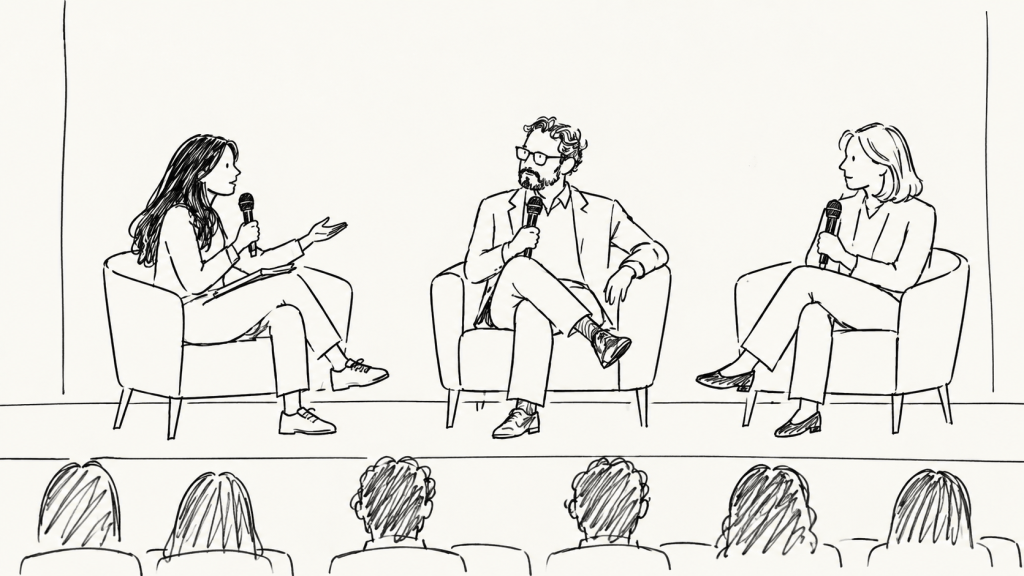
After multiple events in the UK on academia–industry collaboration, ITI CEO Sara Robertson and Dr Joseph Lambert are taking that conversation internationally to the St Jerome’s Symposium, organised by the Consortium for Translation Education Research (CTER). If I were hosting the event, these are the questions I would ask. 1. Let’s start with the evidence.…
-
Phantoms in the Governance: 11 UK Universities, an Interest Group, and the Mystery of Formal–Informal Partnerships
An investigation into university–industry partnerships, student supervision, commercial interests, academic independence and the political economy of knowledge production This journalistic investigation examines relationships publicly presented by the Association of Translation Companies as “Partnerships” with 11 UK universities when this investigation began. The ATC is an interest group representing corporate actors in the translation and interpreting…
-
Can you imagine what it feels like to be a translation academic in the era of mega commercial intermediaries?

I have firsthand experience of how being in academia can make you question your life choices! And I feel slightly uncomfortable admitting this, but sometimes I look at our field and think: this should have been the golden age of Translation Studies. Think about it. Human beings have never been so connected, and multilingual communication…
-
What does Translation and Interpreting Studies know about the economic lived realities of translators and interpreters?
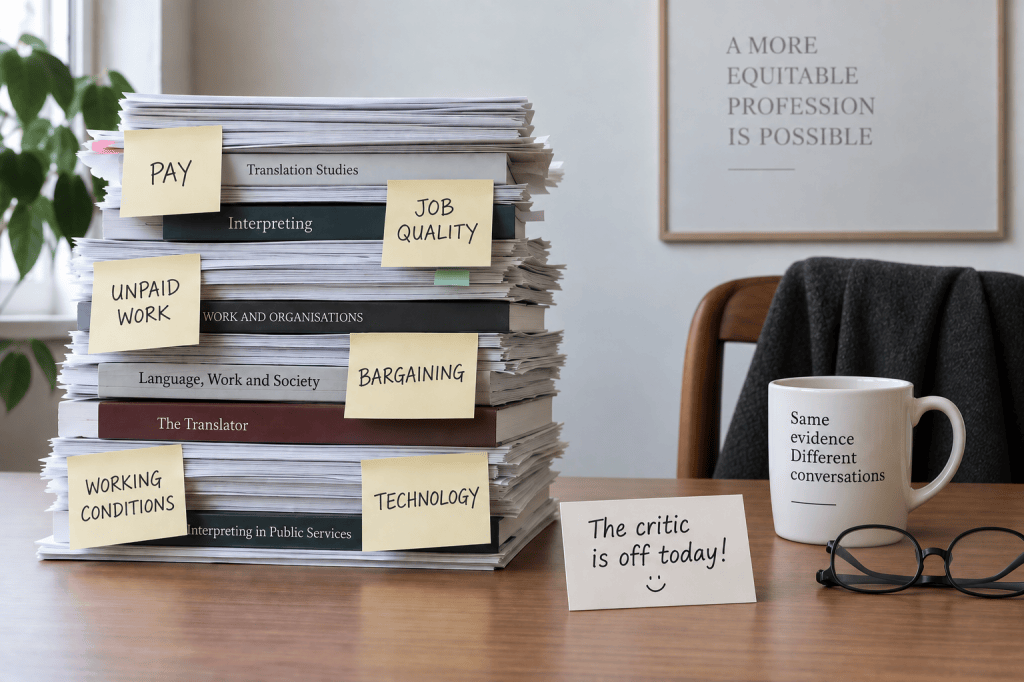
I am a PhD researcher investigating inequality in outsourced public service interpreting in the United Kingdom. My research has documented low remuneration, economic insecurity, weak employment protections, diminishing bargaining capacity and inadequate health and safety protections among public service interpreters. It also examines the outsourcing arrangements within which these inequalities occur, and how those arrangements…
-
If I Were the Head of ITI
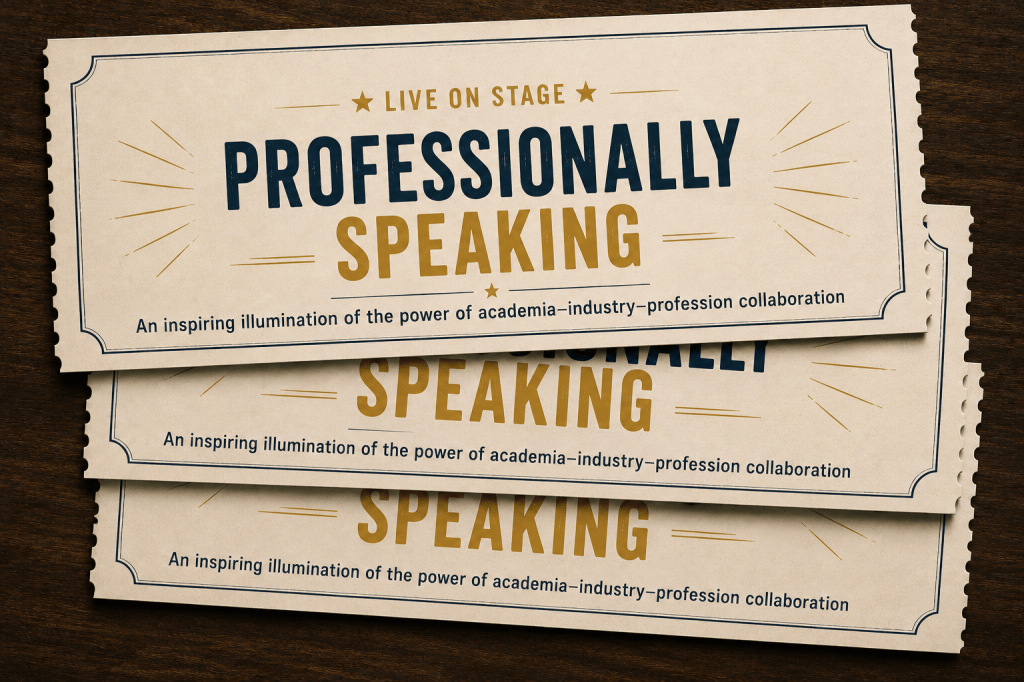
For almost three years, I have been researching, analysing and critiquing the Institute of Translation and Interpreting (ITI) — its public positions, its relationships with commercial actors, the narratives it promotes, the questions it asks and, sometimes, the questions I think it should be asking but isn’t. My interest is not really in ITI for…
-
Who Speaks for Academia? An Open Letter to ITI’s University Members on Due Diligence, Representation and Academic Independence

The CEO of the Institute of Translation and Interpreting (ITI) is due to speak at an upcoming Association of Translation Companies (ATC) event in a discussion framed around “academia, associations and community”. But who, exactly, speaks for “academia”? The ITI has a controversial membership structure: it offers membership to individual translators and interpreters, universities, and…
-
What Happens If Translators Quit?
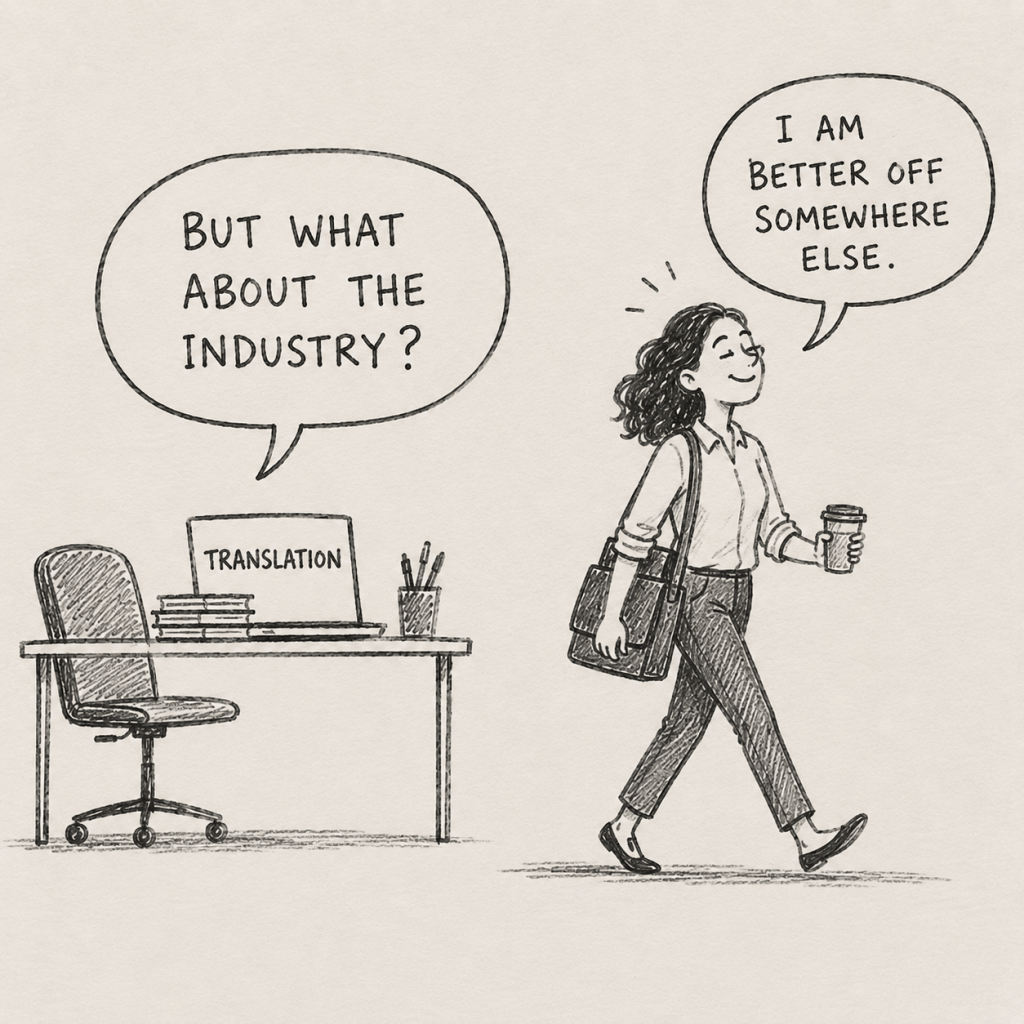
Please indulge me in a little thought experiment. Imagine that translators who can no longer earn what they consider a reasonable living from translation gradually decide: Enough. I want a secure income and a better work-life balance. I can do something else. What happens next? Some translators might be disheartened about quitting work they love.…
-
Dear Translators and Interpreters, You Are Not Alone!

Last week, I watched the drama Mr Bates vs The Post Office because I was looking for inspiration, strength and resilience. As I navigate my own efforts to complete my thesis on the injustices faced by public-service interpreters, I wanted to watch the story of people who persisted in questioning a system that seemed overwhelmingly…
-
Corporate Capture of Academic Narratives or Productive Industry–University Collaboration?

Over the past three years, my PhD research has focused on inequality in the UK’s public service interpreting sector. Through survey research, policy analysis and documentary evidence, I have been investigating what outsourcing and commercial intermediation have meant for the people who actually provide language services. The picture that emerged is deeply troubling. Public service…
-
Reflections on My Industry–Academia Collaboration and Why I Call on Universities to Undertake Serious Due Diligence

Over the past few years, I have spoken and written extensively about labour rights, power, and industry–academia collaboration within Translation Studies. Some readers may wonder why these issues have become such a central focus of my work. The answer lies partly in my own experience. I joined an industry–academia doctoral collaboration believing it would provide…

