
Tag: education
-
We Seriously Need to Talk About Alternatives: Continuing My Ethical Plea to Translation Studies
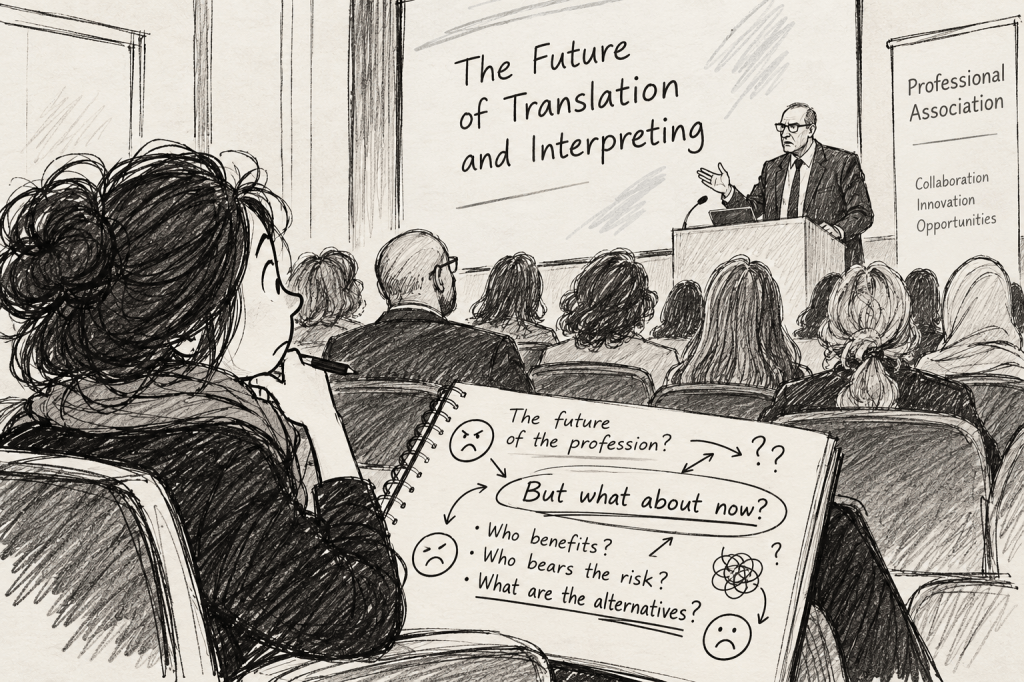
Dear Translation Studies, I don’t want you to only prepare translators and interpreters for the future. I want you to help interrogate the present and invite our collective scholarly genius to make the present liveable as we continue to envision the future. My previous love letter borrowed a simple proposition from Joseph Stiglitz: creating a…
-
Celebrating International Translation Day with a Candid (Imagined) Conversation with ITI CEO Sara Robertson and Dr. Joseph Lambert
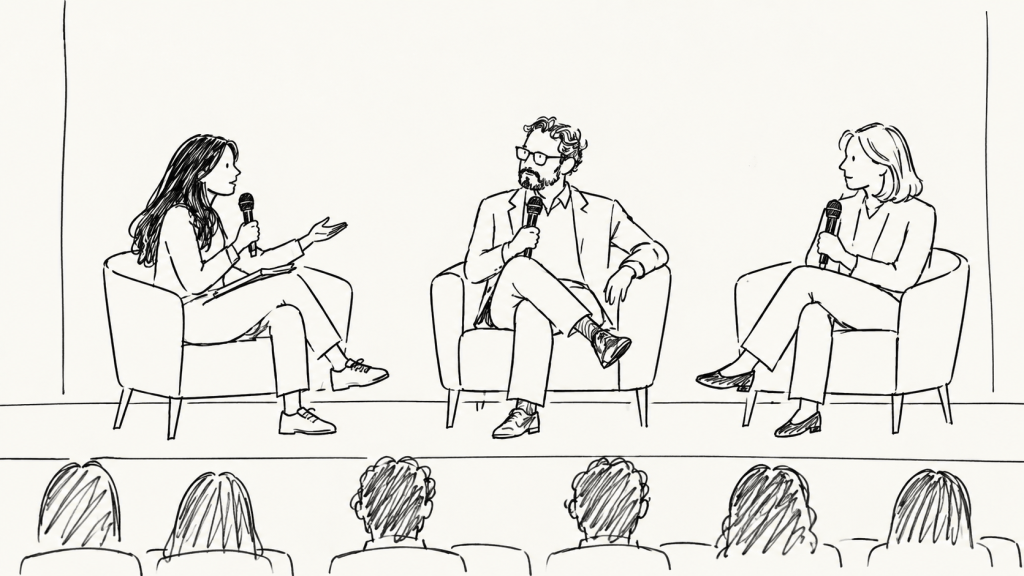
After multiple events in the UK on academia–industry collaboration, ITI CEO Sara Robertson and Dr Joseph Lambert are taking that conversation internationally to the St Jerome’s Symposium, organised by the Consortium for Translation Education Research (CTER). If I were hosting the event, these are the questions I would ask. 1. Let’s start with the evidence.…
-
Phantoms in the Governance: 11 UK Universities, an Interest Group, and the Mystery of Formal–Informal Partnerships

An investigation into university–industry partnerships, student supervision, commercial interests, academic independence and the political economy of knowledge production This journalistic investigation examines relationships publicly presented by the Association of Translation Companies as “Partnerships” with 11 UK universities when this investigation began. The ATC is an interest group representing corporate actors in the translation and interpreting…
-
Can you imagine what it feels like to be a translation academic in the era of mega commercial intermediaries?

I have firsthand experience of how being in academia can make you question your life choices! And I feel slightly uncomfortable admitting this, but sometimes I look at our field and think: this should have been the golden age of Translation Studies. Think about it. Human beings have never been so connected, and multilingual communication…
-
What does Translation and Interpreting Studies know about the economic lived realities of translators and interpreters?

I am a PhD researcher investigating inequality in outsourced public service interpreting in the United Kingdom. My research has documented low remuneration, economic insecurity, weak employment protections, diminishing bargaining capacity and inadequate health and safety protections among public service interpreters. It also examines the outsourcing arrangements within which these inequalities occur, and how those arrangements…
-
Who Speaks for Academia? An Open Letter to ITI’s University Members on Due Diligence, Representation and Academic Independence

The CEO of the Institute of Translation and Interpreting (ITI) is due to speak at an upcoming Association of Translation Companies (ATC) event in a discussion framed around “academia, associations and community”. But who, exactly, speaks for “academia”? The ITI has a controversial membership structure: it offers membership to individual translators and interpreters, universities, and…
-
Dear Translators and Interpreters, You Are Not Alone!

Last week, I watched the drama Mr Bates vs The Post Office because I was looking for inspiration, strength and resilience. As I navigate my own efforts to complete my thesis on the injustices faced by public-service interpreters, I wanted to watch the story of people who persisted in questioning a system that seemed overwhelmingly…
-
Corporate Capture of Academic Narratives or Productive Industry–University Collaboration?

Over the past three years, my PhD research has focused on inequality in the UK’s public service interpreting sector. Through survey research, policy analysis and documentary evidence, I have been investigating what outsourcing and commercial intermediation have meant for the people who actually provide language services. The picture that emerged is deeply troubling. Public service…
-
Draft Ethical Principles for Professional Organisations

Over the past three years, I’ve spent a great deal of time analysing the role of professional organisations in the translation and interpreting sector as part of my research on the ethical governance of precarious labour. I’ve written extensively about what I believe is going wrong. I’d now like to shift the conversation towards what…
-
Reflections on My Industry–Academia Collaboration and Why I Call on Universities to Undertake Serious Due Diligence

Over the past few years, I have spoken and written extensively about labour rights, power, and industry–academia collaboration within Translation Studies. Some readers may wonder why these issues have become such a central focus of my work. The answer lies partly in my own experience. I joined an industry–academia doctoral collaboration believing it would provide…
-
Collaboration or Exclusion? Why is Translation Studies Still Ignoring Power and Legitimacy?

As someone researching equality, diversity and inclusion (EDI), with a focus on labour rights and working conditions in the translation and interpreting industry, I have been deeply concerned by growing calls for industry–academia collaboration within Translation Studies. The value of collaboration is often asserted rather than supported by evidence or logical arguments. These collaborations are…

