
Tag: ai
-
What Would a Good Translation Industry Look Like?

In a previous article, I explored a deceptively simple lesson from Joseph Stiglitz: markets are not natural phenomena. They are shaped by institutions, laws, policies, regulations, norms and power. But that insight raises another question. If markets are shaped by us, how should we shape them? Stiglitz’s work offers valuable normative insights for thinking about…
-
What Happens If Translators Quit?
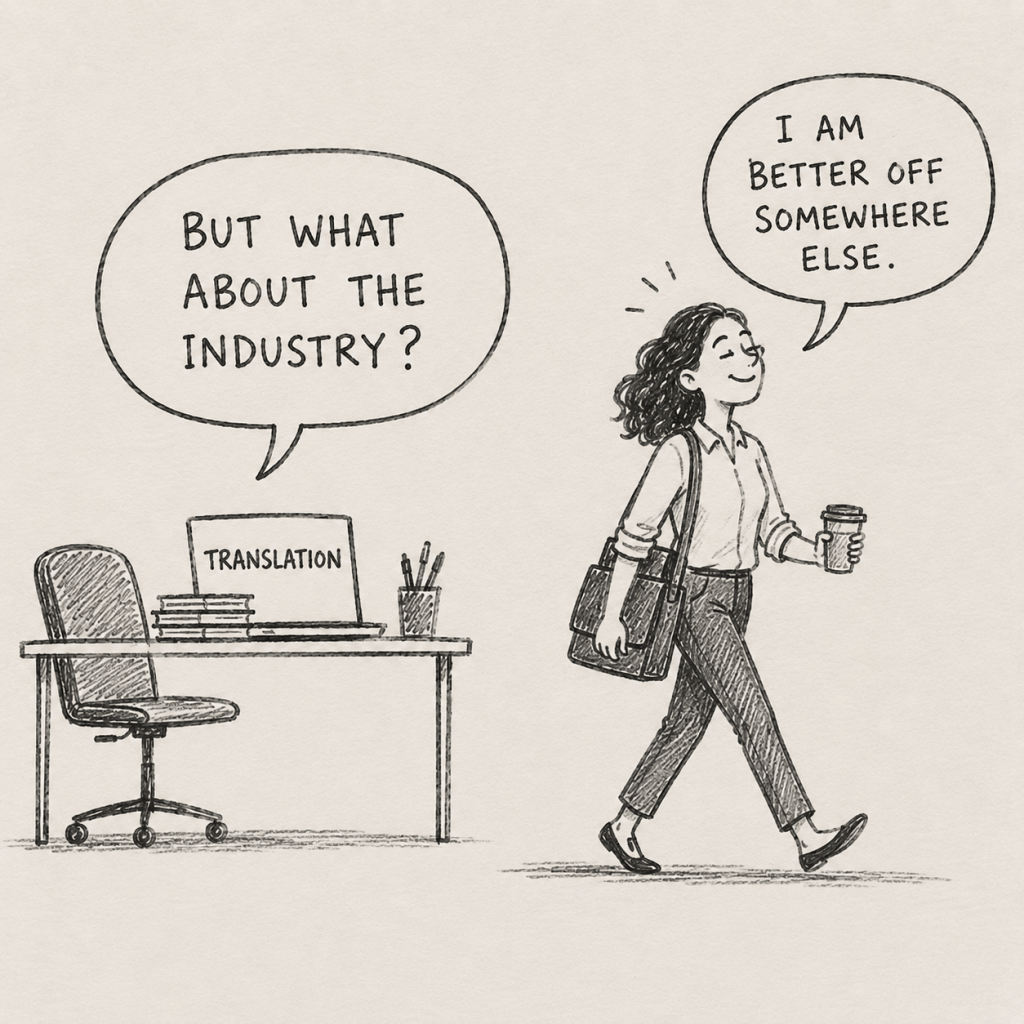
Please indulge me in a little thought experiment. Imagine that translators who can no longer earn what they consider a reasonable living from translation gradually decide: Enough. I want a secure income and a better work-life balance. I can do something else. What happens next? Some translators might be disheartened about quitting work they love.…
-
Can Industry–Academia Collaboration Find a Fair MTPE Pricing Model Without Addressing What “Fair” Means and Without Asking Translators?

I just finished reading an academic paper entitled “In search of a fair MTPE pricing model: LSPs’ reflections and the implications for translators.” The study examines machine translation post-editing (MTPE) pricing through a focus group of eight representatives of commercial intermediaries, referred to in the study as Language Service Providers (LSPs). The participating companies were…
-
Dear Translators and Interpreters, You Are Not Alone!

Last week, I watched the drama Mr Bates vs The Post Office because I was looking for inspiration, strength and resilience. As I navigate my own efforts to complete my thesis on the injustices faced by public-service interpreters, I wanted to watch the story of people who persisted in questioning a system that seemed overwhelmingly…
-
Corporate Capture of Academic Narratives or Productive Industry–University Collaboration?

Over the past three years, my PhD research has focused on inequality in the UK’s public service interpreting sector. Through survey research, policy analysis and documentary evidence, I have been investigating what outsourcing and commercial intermediation have meant for the people who actually provide language services. The picture that emerged is deeply troubling. Public service…
-
Who Is a Language Service Provider, and Who Are the Intermediaries?

One of the persistent sources of confusion in the translation and interpreting profession—and in Translation and Interpreting Studies—is the way we use the term language service provider (LSP). For years, the term has been used to describe commercial agencies and multinational companies that sit between clients and translators or interpreters. Yet this terminology deserves reconsideration.…
-
Draft Ethical Principles for Professional Organisations

Over the past three years, I’ve spent a great deal of time analysing the role of professional organisations in the translation and interpreting sector as part of my research on the ethical governance of precarious labour. I’ve written extensively about what I believe is going wrong. I’d now like to shift the conversation towards what…
-
A Patchwork of Insecure Jobs or Diversification? What the Positive Language of Portfolio Careers Might Be Obscuring

Many translators and interpreters today do not have a single career. They have a patchwork. A few hours of translation here. Some teaching there. A training session next week. A short editing project next month. A handful of regular clients and intermediaries, a stream of one-off assignments, and a constant search for the next opportunity.…
-
Language Justice Reading List

The list includes articles I have written on the topics of equality and labour rights for interpreters and translators, including empirical research, policy analysis, and critical commentary. They are grouped by theme rather than method, and some contributions appear in multiple categories. The importance of justice and fairness extends beyond the translation industry. As economist…
-
Three Simple Ways Translators Can Reclaim Agenda-Setting Power

Many translators and interpreters are facing growing challenges. Rates continue to fall, financial insecurity is intensifying, and stories of unfair treatment circulate widely across professional networks. Yet translators are often excluded from shaping the conversations about the profession. At conferences, within professional organisations, and in some academic and industry discussions, narratives that align closely with…
-
Are You Procuring Translation and Interpreting Services Through Agencies and Platforms? Here’s What You Need to Know

When organisations procure translation and interpreting services, decisions often focus on practical considerations: cost, availability, turnaround times, scalability, and administrative convenience. I do not deny that these factors matter. However, language services are not simply interchangeable products moving through a supply chain. They are delivered by human beings. Behind every translated document, interpreted meeting, healthcare…

