
Tag: history
-
Theory of Change for the UK Translation and Interpreting Industry: Repoliticising Labour Precarity and Mapping Responsibility
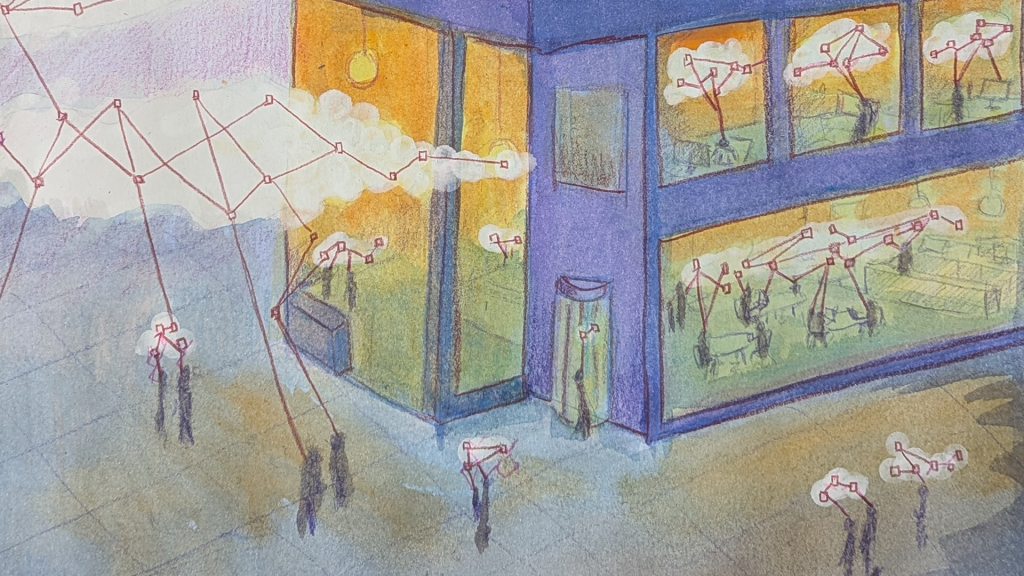
Abstract This article proposes a theory of change for understanding and addressing persistent low pay and precarity in the translation and interpreting industry through the repoliticisation of translation labour. Building on my previous analyses of translators’ labour conditions, it argues that low pay is structurally produced through the organisation of the translation supply chain. Translation…
-
What hope is there for translators when their intensifying financial insecurity is often depoliticised, even in The Guardian’s coverage?

I read with interest the Guardian’s recent article on AI and translation labour titled “‘Being human helps’: despite rise of AI is there still hope for Europe’s translators?” While I am grateful for an article that acknowledges worsening precarity, declining rates, and reduced workflows, I believe it still reproduces a depoliticised and problematic framing, presenting…
-
Is Professionalisation Rhetoric Contributing to a Precarity Trap for Translators and Interpreters?

There is a crisis across the translation and interpreting industry. An expanding body of academic research documents worsening working conditions across the profession: declining rates, fragmented work, weakening bargaining power, growing financial insecurity, and intensifying precarity. My own research shows that a large proportion of public service interpreters are struggling to earn enough to meet…
-
Why Invoke “A More Joyful Life” While Many Linguists Struggle to Sustain One? An Open Letter to the Head of the Chartered Institute of Linguists

Dear John Worne, This as an open letter in response to your remarks during the event Studying Translation in the Age of AI, organised by the University of Surrey. It highlights serious concerns regarding the partial and potentially misleading account you presented of the translation and interpreting industry by reframing structural challenges—such as declining pay,…
-
Studying Translation in the Age of AI: What Gets Said, What Gets Left Out
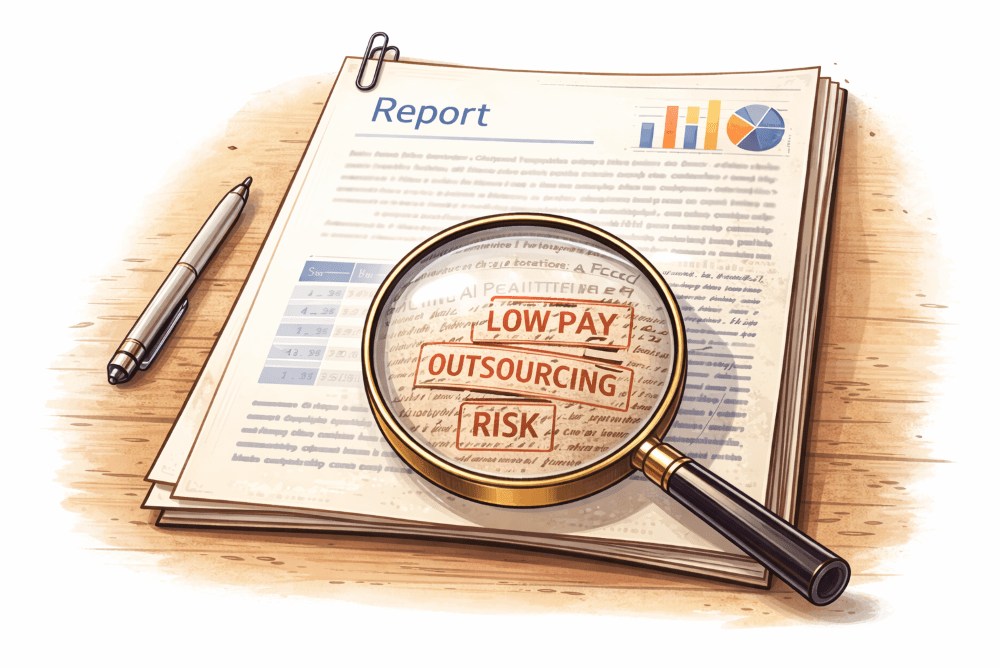
This is not a neutral reflection. It is a deliberate intervention. As an academic researcher, I once again feel compelled to speak out. Over the past few years, I have watched a particular narrative about the translation and interpreting industry take shape across academic publications, public events, and institutional collaborations. It is a narrative that…
-
This upcoming election, make ending exploitation within outsourced public services a top priority
As the UK prepares for the upcoming elections, an issue that deserves far greater public attention is the risk of exploitation within outsourced public service supply chains. Voters in Scotland and Wales will elect representatives to their national parliaments, while a number of local council and mayoral polls will take place in England. Across these…
-
Urging the Government to publish its action plan to prevent exploitation within public supply chains: An open letter to the Secretary of State for Education and Minister for Women and Equalities, Bridget Phillipson MP
Dear Secretary of State, I am writing in response to the government’s recent announcement of employer action plans on the gender pay gap and menopause support, published ahead of International Women’s Day 2026. I welcome the recognition that women’s experiences at work continue to be shaped by structural inequalities, and I strongly support the aim…
-
Understanding the Rise of Attribution Bias in Translation Studies: Four structural reasons responsibility is increasingly misattributed in scholarly discussions of translators’ working conditions
There’s a pattern that keeps resurfacing in discussions about the translation industry—particularly around falling rates, worsening working conditions, and the increasing precarity of translators. The pattern is subtle, but deeply consequential and ethically problematic. It’s called attribution bias, and it is becoming increasingly common in translation industry studies. Attribution bias refers to the tendency to…
-
Universities Must Learn from the Epstein Scandals: Do Your Damn Due Diligence and Protect Whistle-blowers

By Fardous Bahbouh, Researcher & Consultant on Labour Rights, Public Policy, and the Political Economy of the Translation Industry We all know it: the system is wrecked, but that should never stop us from trying to fix it. Maybe nothing can ever measure up to the horror those girls and young women lived through. The…
-
How much does the translation industry cost our society by underpaying its largely precarious workforce?
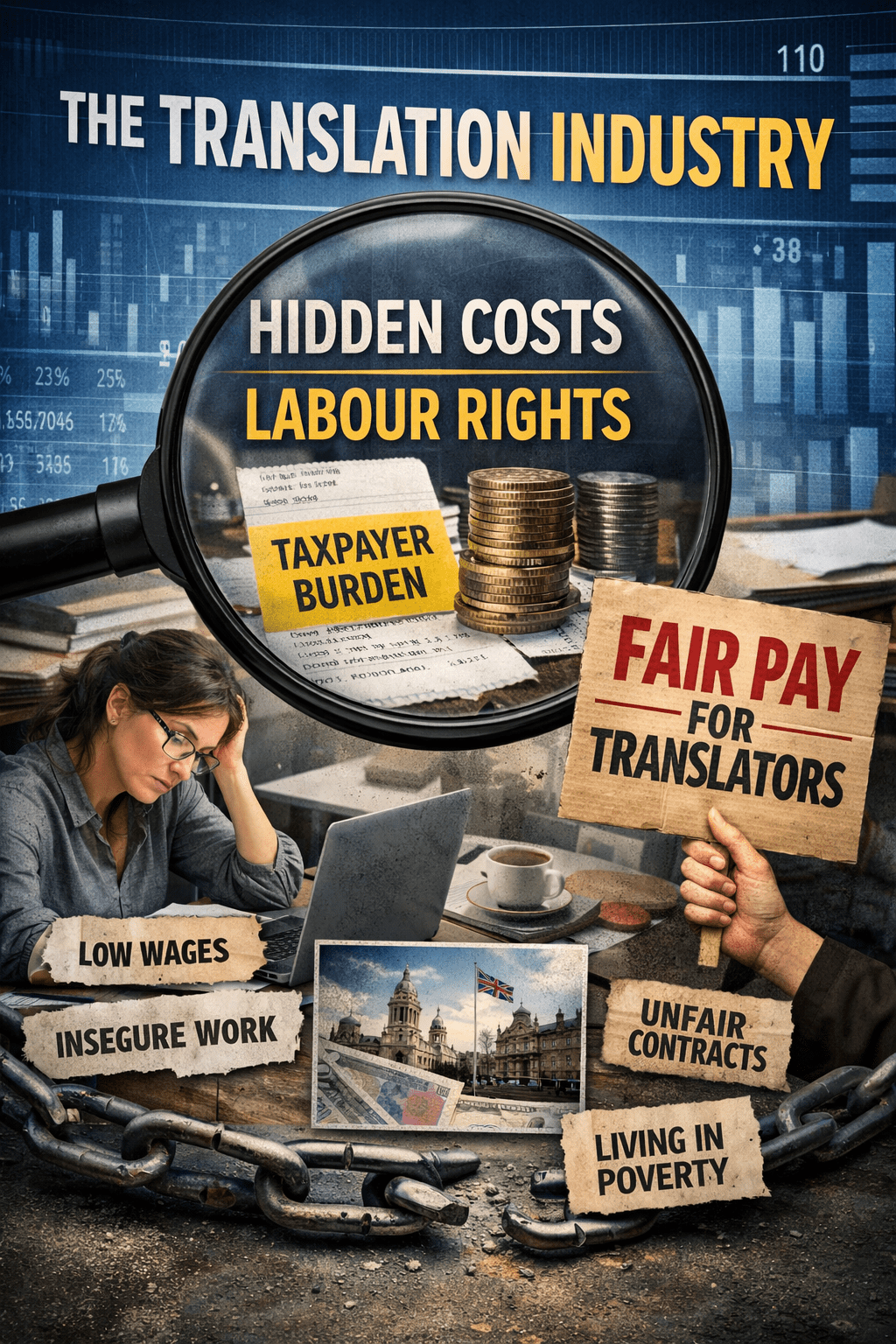
The translation and interpreting industry is frequently celebrated as a multi-billion-pound economic success story. Yet behind these impressive figures lies a far less comfortable truth. Drawing on research into working conditions across the sector, it becomes clear that many translators and interpreters — the very professionals whose labour produces the service — struggle to earn…
-
The Precariat: Critical Insights for Translators and Interpreters in an Age of Insecurity

By Fardous Bahbouh, Researcher & Consultant on Labour Rights, Public Policy, and the Political Economy of the Translation Industry In today’s fast-changing labour market, translators and interpreters are increasingly facing precarious working conditions and intensifying insecurities. The Precariat (2021) is an excellent book by economist Guy Standing that captures the lived realities of workers who…

