

This third article in the series presents further findings from my PhD research at the University of Leeds on inequalities in outsourced public service interpreting (PSI) in the United Kingdom (UK). PSI is a state-mandated function grounded in legal obligations and funded through public resources. However, the delivery of these services is largely outsourced to private language service providers (LSPs), positioning interpreters’ labour within a competitive market environment shaped by cost-containment imperatives. Drawing on an analytical framework that combines political economy, intersectionality, and theories of justice, this research examines how structural arrangements in outsourced PSI give rise to inequalities affecting interpreters’ working conditions and professional recognition.
Building on the previous discussion of health and safety risks, low pay, and financial insecurity, the focus here shifts to another dimension of inequality emerging from the same institutional and market dynamics: working conditions. To ensure that interpreters’ perspectives remain visible, the analysis incorporates selected direct quotations from survey respondents, contextualised within broader theoretical frameworks.
1. Strong commitment but challenging working conditions
Survey responses suggest that interpreters’ day-to-day working lives reflect a tension between the social value of PSI and the market logics embedded in outsourced provision. Many interpreters express strong commitment to facilitating communication in healthcare, justice, and welfare settings. At the same time, their working environments are characterised by physical and emotional strain, limited organisational support, and constrained professional autonomy. These findings indicate that outsourcing shapes not only pay levels but also the broader conditions under which interpreters perform their work.
A large majority of respondents reported a strong sense of professional purpose: 68% stated that their job frequently gives them the feeling of work well done, and 85% reported that they frequently feel they are learning new things while interpreting. Similarly, 83% indicated that they frequently feel they are doing useful work (Figure 1).
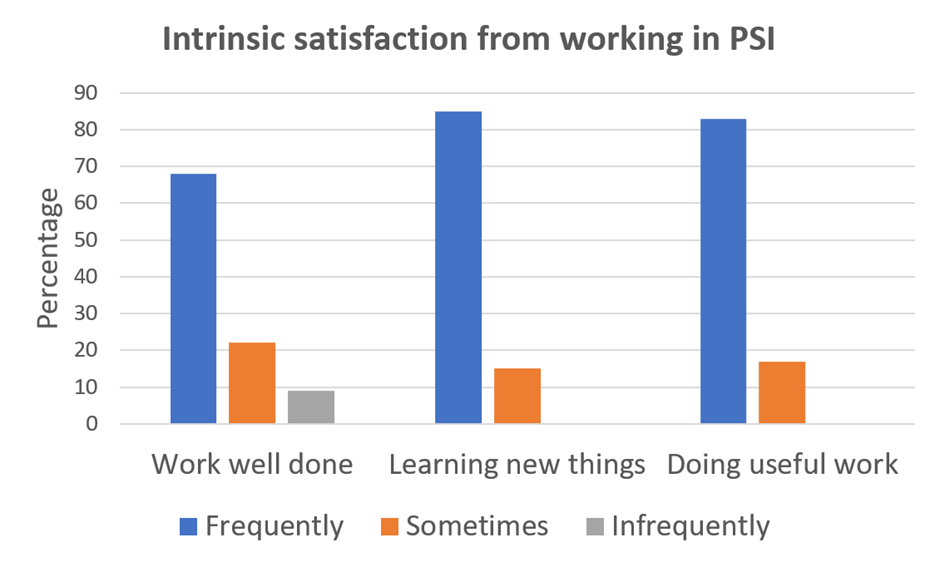
Figure 1: Reported interpreters’ intrinsic Satisfaction
These responses suggest that interpreters derive meaning from enabling access to public services for individuals who do not speak fluent English. Several respondents described valuing the opportunity to act as the voice of those navigating complex institutions in a second language, sometimes drawing on their own experiences of migration. One interpreter stated interpreter stated that “I am committed to use my skills to support others. My personal experience as a non-native English speaker is a motivator as I understand the perils that could be faced due to language barriers.”
However, this strong sense of purpose coexists with demanding working conditions shaped by outsourcing arrangements that prioritise flexibility and cost-cutting. As discussed in the previous article on health and safety risks, many interpreters experience their work as physically and emotionally taxing. A majority of respondents reported frequently feeling exhausted at the end of the working day, with 63% indicating physical fatigue and 51% reporting emotional strain. These pressures are intensified by the unpredictability associated with on-demand service models commonly used in outsourced PSI: 70% of interpreters reported frequently being asked to work at short notice (Figure 2).
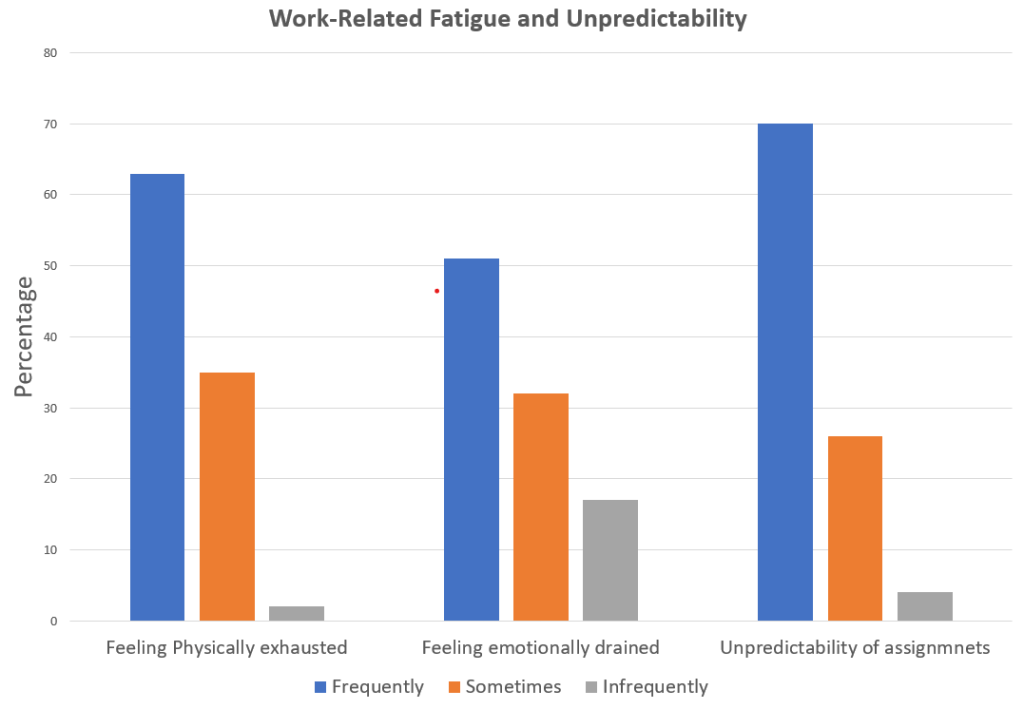
Figure 2: Physical exhaustion, emotional drain, and assignments unpredictability in PSI
Such patterns reflect operational requirements within contractual frameworks that emphasise rapid service delivery across multiple institutional settings.
2. Limited organisational support and problematic power dynamics
Outsourcing arrangements also influence the extent to which interpreters receive organisational support. Only 4% of respondents reported frequently receiving support from managers (Figure 3). This finding is notable given that interpreters frequently operate in complex institutional environments such as courts, hospitals, and police stations, where communication accuracy can have significant consequences.
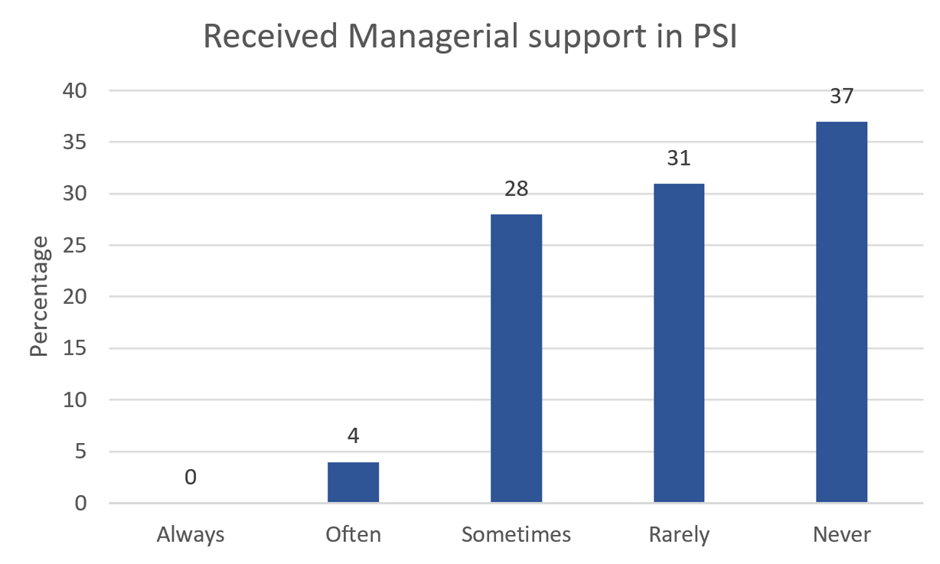
Figer 3: Interpreters’ perception of managerial support
While some interpreters described occasional support from colleagues, this tends to be informal and inconsistent. One respondent stated: “I don’t know who my managers are or even if I have one both for Agency E and Agency F.” These agencies are among the largest providers of outsourced PSI services in the UK, highlighting the limited visibility of organisational support structures within intermediary contracting arrangements.
Access to assignment information and preparation time also appears shaped by commercial and contractual priorities. Only 6% of interpreters reported frequently receiving sufficient information to prepare adequately for assignments. Respondents described often receiving minimal details beyond the time and location of appointments, with confidentiality cited as a reason for restricted information sharing. However, lack of preparation time may affect both interpreters’ working conditions and the quality of communication in public services.
Survey responses further indicate that relationships between interpreters and agencies are characterised by perceived asymmetries of power. Over one-third of respondents reported frequently hesitating to contact agencies with queries due to concerns about being perceived as difficult or incompetent. A majority reported feeling pressure to accept assignments out of concern that declining work could negatively affect future opportunities. . One interpreter stated that it was “too easy to piss someone off at an agency who has the power to not give you any work” while another explained “one may fall victim of being labelled expensive, difficult or choosy.” Further statements included an interpreter saying “You are at the agencies’ mercy. They could just stop giving you work and you can’t do anything about it.”
These findings suggest that apprehension about negative consequences from agencies is a common factor influencing interpreters’ decision-making, potentially contributing to stress and limiting professional autonomy. Similar observations were reported by Dong and Turner (2016), indicating a persistent problem over time. However, nowadays it has been intensified with the technological development and especially algorithmic control as will be discussed in the following article. One interpreter stated that “I know agencies do monitor interpreters and they may not send you bookings or put you at the back of the list if you don’t answer couple of times for on demand calls.”
These dynamics are also consistent with research on bogus self-employment and what Guy Standing (2021) describes as dependent contracting. Although interpreters are typically classified as self-employed, access to work is often mediated by a limited number of agencies controlling entry to publicly funded assignments. Such arrangements create conditions in which workers formally operate as independent contractors while remaining economically dependent on intermediaries.
Within outsourced PSI, agencies act as gatekeepers to publicly funded work, while the financial risks associated with fluctuating demand, cancellations, and uneven allocation of assignments are borne by interpreters. As a result, decisions about accepting or declining work may be shaped less by genuine flexibility than by concern about future income security. These conditions illustrate how outsourcing can produce hybrid labour arrangements that blur distinctions between employment and self-employment, shifting responsibility for managing risk from institutions to individuals.
In this context, it is important to mention recent legal challenges brought by interpreters, are represented by the legal firm Leigh Day, against major agencies further highlight the contested nature of employment status in this sector (leigh Day, 2023b). Interpreters are seeking recognition of employment protections, including entitlement to the National Minimum Wage and paid holiday. Such cases illustrate ongoing debates regarding the appropriate classification of workers operating within intermediary labour markets.
These findings raise broader questions about how accountability is distributed across outsourcing chains. While agencies coordinate service provision, both agencies and public bodies retain responsibility for ensuring that publicly funded communication support is delivered under conditions conducive to accuracy, fairness, and professional sustainability.
3. Accumulated everyday challenges
In addition to contractual pressures, interpreters reported practical challenges arising from their organisational positioning as external contractors rather than integrated members of institutional teams. Some respondents described long waiting times at security checkpoints in courts or police stations without compensation for time spent queuing, an issue discussed in a recent House of Lords (2025, b) debate as problematic within outsourced interpreting arrangements. Others reported difficulties accessing basic facilities or navigating large institutional environments without adequate guidance. Another interpreter raised concerns about issues like “waiting in the cold with nowhere to sit on police assignments, no adequate audio in court, people talking with their backs to me.”
Individually, such issues may appear minor. Collectively, however, they illustrate how outsourcing structures shape interpreters’ everyday working environments. Respondents also described feelings of isolation linked to freelance status and limited interaction with professional peers. The classification of interpreters as independent contractors transfers responsibility for training, professional development, and income stability onto individuals, while reducing access to organisational support structures commonly associated with employment relationships.
A recurring concern was the perception that interpreters are not consistently recognised as professionals within institutional settings. A repeated concern was that interpreters were not respected or treated as professionals. One interpreter stated that judges pick on them frequently by saying, “lets release the interpreter and ease the burden on the public purse” and added “I am thinking am I the ONLY one getting paid to do my job in court, are these barristers and others are not getting paid?” One interpreter added that “There is no safeguarding against exploitation.” One interpreter complained that they do not get enough assignments that pays a rate they feel could accept, which makes them resent the fact that they “trained for this work at considerable expense” but not being able to work with more security.
Such comments suggest that cost considerations within outsourced procurement frameworks may shape how interpreting is valued relative to other professional roles within public institutions.
4. Reconciling fulfilment and precarity
Although interpreters report high levels of intrinsic satisfaction, these positive indicators must be interpreted with caution. Intrinsic rewards frequently coexist with, rather than compensate for, structural precarity. Research by the Chartered Institute of Personnel and Development (CIPD) has shown that some occupations may be experienced as meaningful despite objectively poor working conditions. This paradox is reflected in accounts from workers who value the social contribution of their roles while simultaneously recognising forms of exploitation (CIPD, 2017). The CIPD report quotes a classroom assistant stating, ‘I and my fellow colleagues are being exploited, but we love our jobs’ (CIPD, 2017, p.19). This sentiment resembles interpreters feeling.
Similarly, Nancy Folbre (2021) cautions against interpreting intrinsic motivation as evidence that working conditions are adequate. Feminised and care-related professions have historically been associated with narratives that frame meaningful work as its own reward, potentially obscuring structural inequalities in pay, security, and recognition.
Within PSI, strong commitment to facilitating communication in essential public services may coexist with limited labour protections and uneven access to professional support. When publicly funded services rely on workers motivated primarily by commitment to social value, intrinsic rewards risk functioning as substitutes for adequate working conditions.
Examining PSI as both a professional practice and a publicly funded service highlights how procurement structures influence the distribution of risks and responsibilities. While agencies play a central role in coordinating service delivery, public institutions commissioning interpreting services should also ensure that outsourcing arrangements support conditions conducive to effective communication and fair treatment of workers.
5. Long-term prospects and career sustainability
Interpreters’ expectations regarding the future of PSI reflect awareness of ongoing structural pressures. Many respondents anticipate limited improvements in pay or working conditions, expressing cautious or pessimistic views regarding the sustainability of the profession.
These perceptions are reflected in attitudes towards recommending PSI as a career: 62% of respondents indicated they would be unlikely to recommend the profession, while only 21% reported that they would be likely to do so. Expectations regarding short-term retention show a more mixed picture. While 56% reported being likely to remain in PSI over the next year, 26% were uncertain and 17% indicated that they were unlikely to continue. Figure 4 combines these findings by comparing recommendation patterns with expectations regarding continued participation in PSI.
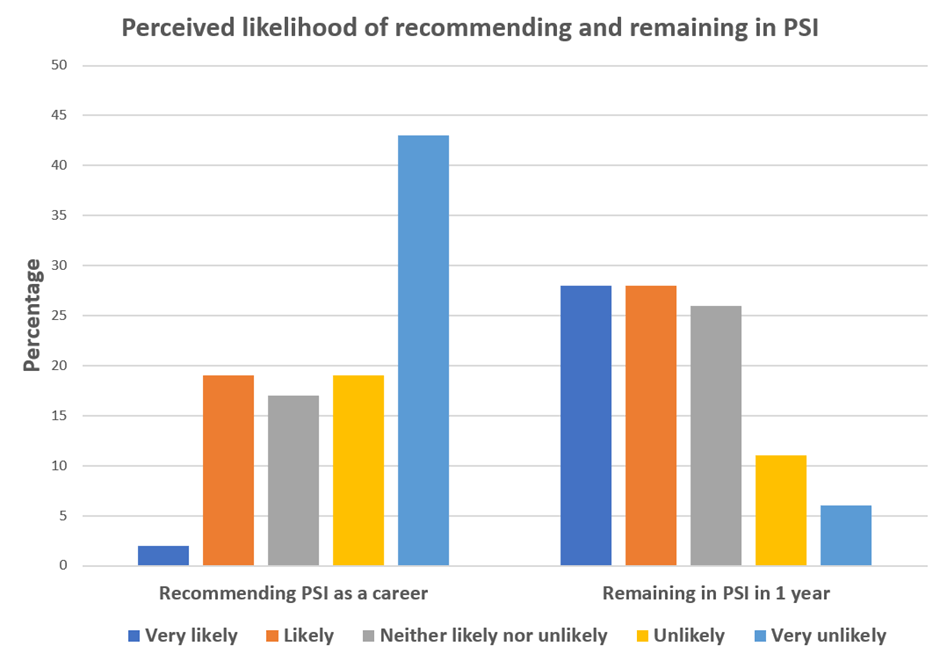
Figure 4: Career sustainability in Public Service Interpreting: recommendation and expected retention
Taken together, the data suggest short-term retention combined with longer-term uncertainty. Such patterns are consistent with research by Guy Standing and Nancy Folbre indicating that workers may remain in precarious occupations despite recognising structural limitations in pay, progression, and security.
These findings illustrate constrained labour “choice” within outsourced PSI. As Nancy Folbre (2021), Guy Standing (2021), and Joseph Stiglitz (2024) argue, meaningful occupational choice requires viable alternatives and adequate institutional protection. At the same time, Jeremias Prassl demonstrates that workers in non-standard employment arrangements frequently fall outside traditional labour law protections. Interpreters therefore perform essential public service work while remaining exposed to structural insecurity, pressures that may be further intensified by technological developments discussed in the next article. Understanding how outsourcing shapes working conditions is therefore essential for assessing the long-term viability of PSI both as a profession and as a public service function.
About the author
Fardous Bahbouh is a Researcher and Consultant specializing in Labour Rights, Public Policy, and the Political Economy of the Translation Industry. Her research is funded by Arts and Humanities Research Council (AHRC) / The White Rose College of the Arts and Humanities (WRoCAH).
The bibliography is provided in the first article to avoid repetition
 Lingua Media Connect
Leave a comment