

By Fardous Bahbouh, Researcher & Consultant on Labour Rights, Public Policy, and the Political Economy of the Translation Industry
This critique reflects the author’s independent analysis and should not be understood as representing any institutional position. It is not connected to, commissioned by, or endorsed by the University at which the author is currently completing doctoral studies.
Abstract
This article critically examines the ethical risks that arise when translation academics collaborate with industry actors without sufficient critical engagement and proper due diligence. It argues that such collaborations can unintentionally legitimise unfair market practices, normalise precarity, and marginalise translators’ lived realities by reproducing industry-aligned narratives under the guise of neutrality, dialogue, or mutual benefit. Rather than attributing responsibility to individual scholars, the article interrogates the structural, institutional, and epistemic conditions that shape how certain forms of knowledge about translation work are produced, circulated, and prioritised.
A particularly urgent dimension of this analysis is that its ethical and structural concerns extend beyond academic debate. The analysis contextualises calls by Joseph Lambert and Callum Walker for increased industry–academia collaboration alongside the active involvement of the Association of Translation Companies (ATC) in constructing and promoting a positive narrative about language service providers (LSPs), many of which pay translators and interpreters rates widely reported as low and, in some cases, exploitative. This is evidenced by the ATC’s claimed “support” for Lambert and Walker’s edited volume The Routledge Handbook of the Translation Industry and Lambert’s book Translation Ethics (ATC, 2025a; 2025b) (see Appendix 1 & 2). If this claim is accurate, the absence of a clear disclosure of commercial “support” in these textbooks raises serious ethical questions. If the claim is inaccurate, it nonetheless warrants concern and calls for robust due diligence by academic authors, editors, universities, and publishers.
Yet issues of transparency, verification, and safeguards in industry–academia collaboration are strikingly absent from Lambert and Walker’s work, despite its repeated advocacy for closer engagement with industry. Equally absent is any discussion of how such collaboration may be mobilised as reputational capital, potentially enabling the ATC to lobby for the further outsourcing of public service interpreting and translation.
Additionally, the ATC has recently joined the association that brings together translation departments in various universities in the UK and Ireland, the Association of Programmes in Translation and Interpreting (APTIS) (ATC, 2025c, p.11), whose upcoming annual conference will address the topic of industry–academic collaboration (APTIS, 2025). These developments show that the patterns of industry engagement and the narratives they promote are not isolated, but actively seek to shape research agendas, professional training, and industry-wide norms.
This article adopts a longitudinal critical approach to key texts by Lambert and Walker published between 2022 and 2025. It contrasts Because We Are Worth It (2022), a pivotal work in the discussion on translators rates of pay, with later texts including Ethics and Sustainability, an ATC blog post written by Lambert alone (2023), Thriving or Surviving (2024), and their edited volume The Routledge Handbook of the Translation Industry (2025). It demonstrates how the more recent work mobilises narratives of translators’ individual resilience, adaptability, and professionalism to prioritise organisational profitability and industry legitimacy over distributive justice, labour rights, and human dignity. Financial insecurity is acknowledged but progressively downplayed, and responsibility for survival is shifted onto individual translators, obscuring structural and institutional determinants. In doing so, these framings seem to contradict the International Labour Organization’s (ILO) conceptualisation of sustainable enterprise, which centres decent work, social dialogue, and secure livelihoods (2007).
Central to this critique is the methodological weakness of their study of the translation industry. While Lambert and Walker describe the translation industry, they venture into complex terrain without engaging with labour economics, political economy, or critiques of market fundamentalism. As a result, their analysis remains descriptively rich but analytically shallow, failing to capture the structural dynamics that shape the industry. This omission risks normalising precarious labour conditions and inadvertently granting industry actors such as the ATC undeserved legitimacy and publicity advantages.
Across the analysed texts, calls for dialogue and industry collaboration are presented as inherently beneficial, yet remain largely unconditioned by requirements for fair pay, decent work, or accountability. This risks producing an echo chamber in which critique is softened or eliminated to preserve access to industry stakeholders, and academic authority is used—however unintentionally—to normalise and stabilise existing inequalities. This article argues that translation academics cannot study the market in isolation; without utilising interdisciplinary frameworks, translation scholarship risks reproducing the very inequalities it purports to critique. It advocates that Translation Studies must reaffirm its ethical responsibility to maintain critical distance from industry interests, foreground translators’ rights, and resist problematic narratives that depoliticise precarity and exploitation by reframing structural injustice as individual adaptation or resilience.
The article concludes by proposing a mission-oriented framework for Translation Industry Studies—encompassing ethics, pedagogy, and industry collaboration—that is explicitly purpose-driven and oriented toward the public good, drawing on Mariana Mazzucato’s (2021) approach to mission-led research and innovation.
1. Introduction
This article critically examines multiple publications by Joseph Lambert and Callum Walker, which often frame translator precarity as an issue of individual resilience rather than structural inequality. It also critique their collaborations with the Association of Translation Companies (ATC). Drawing on a critical political economy framework, it argues that such framing risks legitimising precarious labour, diverting attention from corporate accountability, and narrowing the scope of critical academic inquiry.
In their article Because We Are Worth It (2022), Lambert and Walker offer a measured and ethically grounded analysis of the challenges faced by freelance translators. They examine the effects of technological change, the rise of platform-mediated labour, and the growing dominance of large Language Service Providers (LSPs), all of which exert downward pressure on rates. Freelancers are shown to face a persistent trade-off between low-paid LSP work and higher-paid but less secure direct-client engagements. Drawing on survey data, including the ATC and Nimdzi (2021) report, Lambert and Walker note that translation companies self-reported gross margins of up to 77%, while many translators’ earnings stagnated or declined. They further observe that formal qualifications and translation diplomas have little impact on remuneration. On this basis, they conclude that translators’ earnings remain a “chief ethical and pragmatic concern” for translators (2022, p. 277).
However, their more recent work (Lambert, 2023; Lambert & Walker, 2024; Lambert & Walker, 2025) tends to normalise and marginalise the financial insecurities documented in their own research and elsewhere. It presents overly optimistic conclusions about translators’ love for the profession and sense of fulfilment, assuming they can achieve “self-actualisation” despite persistent financial insecurity and structural disadvantage.
This analysis also illustrates that Lambert and Walker’s engagements with industry frequently stop short of critically interrogating corporate narratives. In doing so, they privilege managerial voices while overlooking the structural forces that produce inequality and labour exploitation. Such engagements risk indirectly legitimising unfair, precarious, and exploitative practices, thereby exacerbating translators’ challenges. They also create opportunities for corporate capture of the narrative around translation work, positioning universities as producers of compliant talent pipelines rather than as spaces for critical reflection on industry politics.
These dynamics raise significant ethical and methodological concerns, highlighting the risks inherent in academic collaboration with industry actors whose practices contribute to the very insecurities being documented. This framing fails to interrogate who is responsible for, and who benefits from, translators’ struggles, ultimately obscuring academia’s role in speaking truth to power and maintaining research independence.
The Routledge Handbook of the Translation Industry (2025) is particularly problematic in this regard. As a field-defining volume, it appears to signal a shift in disciplinary language, with many contributors adopting the rhetoric of “the market” as though it were newly discovered. Yet neoliberalism has shaped labour relations for over four decades, and its damaging effects on equality, job quality, and social cohesion are well documented (Folbre, 2021; Mazzucato, 2021; Standing, 2021; Stiglitz, 2024). Against this backdrop, it is striking that many contributors—and the editors themselves—write through market-centred language with little critical distance, treating it less as an object of analysis than as a governing logic to be readily accepted.
The inclusion of a chapter by Raisa McNab, CEO of the ATC, exemplifies the ethical and epistemic problems that run through The Routledge Handbook of the Translation Industry. Rather than critically engaging industry leadership in dialogue, the Handbook affords a senior figure in an interest group unmediated contributor authority, effectively normalising and legitimising prevailing industry practices. The chapter frames project management entirely through managerial and financial logics—cost optimisation, productivity gains, and companies’ profit—while treating translators as “resources” and remuneration as a variable in cost control rather than a matter of labour rights or fair pay. Practices known to depress earnings are tacitly endorsed, while issues of precarity, workload, wellbeing, and systemic inequality are absent. The lack of explicit disclosure within the chapter of McNab’s institutional role, combined with the absence of countervailing perspectives, raises concerns about conflicts of interest, due diligence, and the overrepresentation of industry narratives at the expense of critical, labour-centred analysis and translators’ voices.
For an industry already in crisis, such omissions have tangible political consequences, shaping industry norms and reinforcing precarious working conditions. Translators and interpreters are not just academic case studies; they are human beings entitled to dignity, fair pay, and decent conditions. Any research that seeks to speak about their lives must keep this front and centre.
While Lambert and Walker venture into the study of the translation industry is commendable, the central limitation of their intervention is methodological, with grave ethical consequences. They fail to draw on necessary interdisciplinary insights from labour economics, neoliberalism critique, or political economy. This omission results in an analytically shallow account that risks distorting the structural realities of the industry. More broadly, their work illustrates a key lesson for translation studies: the industry cannot be studied in isolation. Without the conceptual and analytical tools provided by other disciplines, scholarship risks naturalising existing inequalities, legitimising market-driven hierarchies, and overlooking the structural forces shaping labour, education, and professional practice.
These ethical and analytical issues cannot be fully understood without situating them within the broader narrative strategies of the ATC, which consistently displaces responsibility for declining pay, working conditions, and service quality away from language service providers (LSP). I have analysed how in the ATC public statements, systemic problems are reframed as issues of skills pipelines, individual resilience, or external constraints such as procurement complexity (Bahbouh, 2025a). The following section provides a detailed analysis of these strategies and their implications for translators’ rights and the ethics of industry-academic collaboration.
2. ATC’s Construction of Industry Narratives
The ATC plays a central role in framing the UK language industry narrative around “talent shortages” and industry “competitiveness,” while consistently deflecting attention away from the responsibilities of lLSPs (Bahbouh, 2025a). Across multiple public statements, the ATC displaces responsibility for declining pay, working conditions, and service quality onto external factors such as procurement complexity or individual translator skills. In doing so, it foregrounds industry “collaboration” while marginalising critical questions of power, accountability, and distributional justice.
In particular, the ATC’s narrative around talent shortages is misleading. Multiple studies show that translators and interpreters struggle to find fairly paid and secure work (see, for example, Lambert & Walker, 2022; Moorkens, 2020). There is an increasing body of evidence documenting an exodus of translators and interpreters from the translation industry. For example, Li Li’s (2025) research documents an exodus of PSI interpreters from healthcare interpreting due to low pay and challenging working conditions.
As economist Peter Cappelli argues in his book Why good people can’t get jobs, there is little empirical evidence to support claims of widespread talent shortages; hiring difficulties are more plausibly explained by structural factors, including non-competitive wages, poor working conditions, and employers’ reluctance to invest in training (2012). In other words, the so-called “talent shortage problem” often reflects systemic undervaluation of labour rather than a genuine scarcity of skilled professionals.
From a critical political economy perspective, drawing on theoretical insights discussed in the following section (Folbre, 2021; Mazzucato, 2021; Standing, 2021; Stiglitz, 2024), persistent shortages of skilled translators would ordinarily be expected to exert upward pressure on wages and improve conditions. The fact that low pay persists despite alleged shortages therefore indicates structural market failures, power asymmetries, and institutional practices that suppress remuneration rather than a genuine scarcity of talent. Therefore, when academic and industry-facing commentary reproduces claims of talent shortages without adequate critical engagement with labour market structures, it risks reproducing misleading narratives that align with the interests of language service providers and depoliticise precarity within the industry.
One illustrative example of the ATC’s problematic approach to collaboration is its work with Professional Interpreters for Justice (PI4J), a coalition of eleven UK translators’ and interpreters’ organizations, funded through membership fees paid by translators and interpreters, who are themselves affected by the pay and working conditions under discussion. The organisations included he Chartered Institute of Linguists (CIOL), the Institute of Translation and Interpreting (ITI) The National Register for Public Service Interpreters (NRPSI) and National Union Of Professional Interpreters And Translators (NUPIT) which is part of Unite the Union. Together with the ATC, they issued a joint statement titled Working Together (ATC & PI4J, 2023). This document attributes problems in public service interpreting primarily to external factors such as procurement complexity, while completely omitting the role of LSPs in setting pay and determining working conditions. Notably, its key recommendations focus on continued collaboration with LSPs and increased public funding for LSPs, without proposing any binding mechanisms to ensure that improvements would be passed on to interpreters. While procurement processes are undeniably complex, this framing downplays the effects of monopolistic contract structures and the unequal distribution of risks and rewards within the industry.
The Working Together statement coincided with a 2023 investigation by BBC File on 4, which interviewed public service interpreters who reported being paid less than the minimum wage and found that 10% of public service interpreters were unlikely to remain in the profession within the following 12 months due to inadequate remuneration, illustrating the broader systemic precarity highlighted in this critique (BBC File on 4, 2023). The documentary also revealed, through Freedom of Information requests, that inadequate interpreting support had contributed to cases of infant mortality and serious brain injuries (BBC File on 4, 2023). Similar evidence has been documented by other research, which shows that inadequate interpreting provision has contributed to miscarriages of justice, bodily harm, and even death (Dinisman et al., 2022; Rowntree, 2024).
Despite all the evidence that the UK’s outsourced public service interpreting is in crisis due to systemic precarity and substandard service provision, the ATC was shortlisted the same year for an Equality, Diversity and Inclusion Champion award for supposedly promoting diversity, inclusion, and sustainability within public sector interpreting services (Association Excellence Awards, 2023). This dissonance closely exemplifies Sara Ahmed’s (2012) critique of institutional diversity rhetoric, in which diversity functions less as a mechanism for structural change and more as a form of organisational self-presentation, signalling institutional virtue without materially transforming the conditions that produce inequality.
Recipients of ATC communications were routinely presented with prominent email banners announcing the organisation’s status as a finalist for an Equality, Diversity and Inclusion Champion award, reinforcing a narrative of ethical leadership despite mounting evidence of systemic precarity and deteriorating working conditions within the sector.
The ATC also claims partnerships with universities. While preparing this analysis, I contacted the ten universities listed by the ATC as partners (ATC, n.d.) to clarify the nature of these relationships and the safeguards implemented by universities. Most did not respond. One university stated that it “works with a wide range of stakeholders in the field of translation and interpreting,” had found such engagements “mutually instructive,” and embeds contact with external stakeholders within a “robust academic framework” provided through a Professional Development module. This response framed partnership primarily in pedagogical terms, without addressing questions of power, accountability, or the effects of legitimising particular industry actors.
By contrast, one university confirmed that it had no formal ties with the ATC. Despite this, the ATC publicly presents the university as a partner institution. Its 2025 end-of-year report lists the logos of the ten universities and describes these relationships as active partnerships encompassing academic programmes, research aligned with industry priorities, institutional partnerships, awareness-raising for language professions, and the training of future language services professionals (ATC, 2025c, p.19).
It is not clear whether the ATC obtained formal permission from these universities to reproduce their logos, raising questions about the accuracy of its claims and the potential for misleading representations of institutional endorsement.
The ATC’s positioning is further reinforced through its role as a contributor to, and self-described supporter of, academic publications, including The Routledge Handbook of the Translation Industry and Translation Ethics (ATC, 2025a), extending its reach into the production of knowledge, pedagogical norms, and industry ethics. These publications function as additional mechanisms through which industry narratives are legitimised.
If the ATC’s claim is accurate, then this development raises broader questions about the role of universities and academic publishers in such collaborations. Shouldn’t explicit declaration of commercial affiliations and “support” be an established ethical norm in academic publishing, like any other content creation? To what extent are academic institutions attentive to the potential harms that may arise when industry bodies leverage academic association to bolster their legitimacy and authority? More specifically, does positioning the ATC as a champion of Equality, Diversity and Inclusion—through awards, institutional logos, claims of partnerships, and visibility within academic textbooks—risk enhancing its capacity to lobby for further outsourcing of public service interpreting and translation, even as evidence accumulates that such outsourcing has intensified precarity, suppressed pay, and compromised service quality?
These questions point to the need for greater reflexivity regarding collaboration as a mode of engagement. Rather than functioning solely as knowledge exchange, collaboration may also operate as a mechanism of political, reputational, and epistemic power, shaping not only what research is produced, but which interests are legitimised within academic and policy-facing discourse.
Section 4 of this article illustrates how the ATC further enhances its public image by commissioning academic voices such as Lambert to produce content within this framework. His blog post for the ATC titled Ethics and Sustainability positions translators as responsible for managing their own precarity, rather than addressing systemic factors and the responisibilites of the LSPs. This exemplifies how such interventions function as reputational work, shaping how ethical responsibility is understood and allocated within the industry.
Additionally, the analyses in Section 6 of The Routledge Handbook of the Translation Industry (2025) show that Lambert and Walker invited the CEO of the ATC, Raisa McNab, to author a full chapter without critically engaging with the industry narrative she advances. Rather than interrogating how LSPs control translators’ pay and working conditions, her chapter frames project management exclusively through the logics of financial viability, cost optimisation, and market needs, without interrogating how LSPs control translators’ pay and conditions.
Finally, the ATC’s recently announced joining of the Association of Programmes in Translation and Interpreting Studies (APTIS) (ATC, 2025c, p.11)—whose forthcoming conference addresses industry–academic collaboration (APTIS, 2025)—raises questions about whether scholars and students can freely interrogate who is responsible for, and who benefits from, translators’ struggles. Such institutionalisation risks producing an echo chamber in which market-aligned perspectives are amplified, while critical analyses of labour precarity, power asymmetries, and responsibility for deteriorating working conditions are marginalised.
This risk is particularly salient when industry actors gain formal influence within academic governance and curriculum-shaping spaces, potentially narrowing the range of questions deemed legitimate or “constructive.” Notably, Joseph Lambert, whose work is analysed in this article, serves as Vice-President of APTIS.
3. Theoretical Framework
The selected publications of Lambert and Walker are analysed through a theoretical framework of precarity and market dynamics drawing primarily on the work of Guy Standing (2021), whose analysis provides one of the most comprehensive accounts of insecure labour and offers a strong foundation for theorising contemporary conditions in the translation industry. Standing conceptualises the “precariat” as a class-in-the-making characterised by insecure employment, unstable income, weak legal protections, and the erosion of basic rights—conditions increasingly experienced by translators as they face fluctuating pay, fragmented work, and limited – if any- labour protections.
Standing conceptualises precarity in two interrelated senses. The first is insecure employment, referring to temporary, contingent, or intermediary-based work arrangements. The second is unstable income, encompassing variable pay and unpaid work-for-labour (i.e. tasks required by the job that are not compensated, such as administrative duties, invoicing, and applying for jobs). Together, these dimensions capture the material insecurity that defines precarious work.
A central concern in Standing’s analysis is the self-employment model, which, while often framed as offering autonomy, frequently operates as a form of dependence. He argues that this model obscures subordinate labour relations and enables employers to evade the obligations associated with direct employment. Standing refers to such workers as “dependent contractors” (2021, p. 16), who bear the risks of fluctuating demand, lack of benefits, and unpaid time without genuine control over work allocation or the ability to negotiate rates of pay. This description closely mirrors the lived realities of many translators and interpreters, who contend with unpredictable workloads, opaque platform metrics, and persistent pressure to accept undervalued assignments in order to secure ongoing work.
Standing further notes that labour law and collective bargaining were historically constructed around direct employer–employee relationships, but the proliferation of intermediaries has destabilised this framework: “who is responsible when a third party becomes an intermediary? Who is in control, the final employer or the intermediary?” (Standing, 2021, p. 40). This blurring of responsibility intensifies precarity, particularly in outsourced sectors. In his analysis of neoliberalism’s impact on the public sector, Standing argues that outsourcing, privatisation, and casualisation have systematically undermined secure employment and stable benefits, while expanding the ranks of the precariat (2021, p. 60). The transfer of work from the public to the private sector, combined with temporary, part-time, and low-paid contracts, has heightened long-term financial insecurity for workers who previously relied on public-sector employment for stability and protection.
Standing also critiques the impact of neoliberal thinking on education, identifying the commodification of education as an often-overlooked driver of precarity. Education is increasingly framed as an investment in “human capital,” promising improved job prospects and higher earnings. Yet for many graduates—including translators and interpreters—this promise remains unfulfilled. Degrees and professional qualifications no longer guarantee secure or well-paid work, producing frustration, status anxiety, and debt without return, despite individuals bearing the financial burden of education. As Standing observes, education has historically functioned as a “liberating, questioning, subversive process,” but in a market society this role is increasingly marginalised.
For translators and interpreters, this dynamic is particularly damaging. Calls to align university training with commercial interests persist despite declining pay and worsening working conditions, raising fundamental questions about the purpose of higher education and the erosion of critical capacity in favour of narrow employability agendas.
The theoretical framework is complemented by an intersectional political economy lens drawn from Nancy Folbre’s (2021) work, which situates precarity within broader regimes of social reproduction and undervalued labour. Folbre’s analysis enables an examination of how neoliberal restructuring intersects with gendered, racialised, and migratory inequalities, particularly within a highly feminised and racialised workforce.
Finally, a broader macroeconomic and governance perspective is provided through the work of Joseph Stiglitz (2024) and Mariana Mazzucato (2021). Stiglitz argues that financialisation and neoliberal restructuring have displaced social-democratic principles—such as freedom from want and freedom from fear—with a system that prioritises corporate power, liability avoidance, and extraction. He observes that markets are essential, but never efficient on their own; hence, regulation is a critical element of governance (2024). Mazzucato further illuminates how poorly designed public–private partnerships and outsourcing arrangements weaken public-sector capacity and generate long-term institutional dependency. Her public-purpose-oriented economic framework, aligned with the United Nations Sustainable Development Goals, offers a normative alternative to market-driven governance.
Taken together, these perspectives link individual economic insecurity to broader shifts in political norms, institutional priorities, and the governance of labour.
4. Critique of Ethics and Sustainability (2023)
This section argues that Lambert’s (2023) blog post for the ATC reframes structural precarity in the translation industry as an individual ethical and coping problem. Through a discourse of resilience, adaptability, and “talent shortages,” responsibility for declining pay and conditions is shifted onto translators themselves, while the role of language service providers and institutional governance is obscured. The analysis demonstrates how such framings function to depoliticise labour relations and legitimise existing industry power structures.
The risks of industry collaboration are particularly evident in his ATC blog post. Even though Lambert mentions low pay, precarious work, and well-being threats, he omits the structural forces that produce these conditions and a fundamental political question: who is responsible for the decline in translators’ pay and working conditions, and who benefits from this deterioration? By reframing systemic problems as matters of individual coping, resilience, and self-care, Lambert effectively depoliticises labour relations, recasting structural exploitation as personal misfortune and diverting attention away from market structures, institutional arrangements, and governance failures that shape insecurity in the translation industry.
Perhaps the most concerning aspect of Lambert’s post is his use of the term “sustainability” to convey the meaning of the continuity of translation companies’ profitability with the ethical imperative of the “sustainability” of decent livelihoods for all people. In the International Labour Organisation (ILO) framework, a sustainable enterprise integrates economic, social, and environmental objectives, pursuing productivity within robust governance systems while ensuring secure livelihoods through freely chosen employment and active social dialogue across organisational, sectoral, and value-chain levels (ILO, 2007). Lambert, by contrast, appears to construe sustainability primarily as the continued profitability of translation companies and the availability of compliant, adaptable translators willing to accept the status quo and absorb risks. This narrowing of sustainability reverses responsibility: institutional and structural failures are obscured, while the burden of adjustment is displaced onto individual workers. Sustainability, in this formulation, applies to firms rather than livelihoods.
Lambert also frames “talent shortages” as a pressing sustainability concern, which risks diverting attention from the real issues of structural market failures, power asymmetries, and institutional practices that suppress remuneration and increase the flexibilization of labour, as discussed above in Section 2. Additionally, in Standing’s terms, translators increasingly function as “dependent contractors” (2021, p.16), bearing the risks of fluctuating demand, unpaid labour, and limited control over work allocation, without compensation that reflects the risks they assume. Lambert’s framing fails to acknowledge these dynamics, instead presenting insecurity as a matter of individual adjustment and resilience while echoing the ATC’s narrative of talent shortages.
Lambert’s blog post further emphasises self-care, vigilance, and adaptability as ethical imperatives while neglecting collective and structural solutions such as regulation, collective bargaining, or institutional reform. By foregrounding personal strategies, the post implicitly normalises the disconnect between industry profitability and worker precarity, presenting individual adaptation as both necessary and sufficient. This raises a fundamental ethical question: should the primary ethical priority of the translation industry not be, first and foremost, the obligation to avoid exploitation?
Lambert’s analysis also identifies “untrained translators” entering the market as a challenge (2023). Again, this attribution shifts responsibility onto workers, aligning the blog with translation-company perspectives. This framing overlooks evidence that credentials do not reliably increase pay (Lambert & Walker, 2022) and primarily serve employers by enhancing professional image and streamlining recruitment (Chan, 2010). CSA Research further shows that 43% of translators worldwide do not acquire formal training (CSA Research, 2020). It is therefore particularly problematic that Lambert’s analysis implies that a group of translators themselves are responsible for deteriorating pay and conditions, rather than recognising the structural role played by translation companies—the very actors represented by the ATC.
This attribution of responsibility is not an isolated rhetorical move, but rather situated within the broader institutional context discussed in the introduction of the article that examines the ATC wider narrative strategies and their role in deflecting responsibility away from language service providers.
In sum, when analysed through a political economy lens attentive to precarity, Lambert’s blog misrepresents both the nature and causes of insecurity in translation work. Structural, institutional, and economic forces are reframed as individual challenges, while exploitation is obscured by a discourse of adaptation, resilience, and “sustainability” narrowly defined in terms of company viability rather than secure and dignified work for translators.
5. Critique of Thriving or Surviving (2024)
In Thriving or Surviving (2024), Lambert and Walker shift away from their earlier identification of low pay as a central ethical concern and advance a narrative in which translators are presented as capable of achieving self-actualisation despite persistent economic insecurity. This section argues that such a framing individualises precarity, obscures structural responsibility for deteriorating pay and working conditions, and risks normalising insecurity as compatible with professional fulfilment. By relocating the problem of precarity from political economy to individual psychology, the article depoliticises labour inequality and narrows the scope of ethical critique.
Here, Lambert and Walker suggest that, despite structural obstacles, translators can still achieve self-actualisation through their work, drawing on Maslow’s hierarchy of needs. This represents a clear shift away from their earlier call to address translators’ economic precarity toward a more individualised and psychological framing of fulfilment (2024). Such a move risks obscuring the material realities of low pay and insecurity that characterise much of the profession. Notably, the authors state that “for most translators, in the UK at least, basic needs are likely met” (2024, p.79), without clarifying whether these needs are met through income derived from translation work or through reliance on state benefits, family support, or other external sources.
Crucially, they do not interrogate what it means for “basic needs” to be met through reliance on state benefits rather than through fairly paid work. Reliance on welfare in place of decent employment can undermine self-esteem, erode a sense of agency, and negatively affect psychological well-being. Reviewing a wide body of evidence on the health impacts of precarity, Standing (2021) observes that chronic insecurity, unstable income, and the inability to plan one’s life generate persistent anxiety and psychological strain, with profound consequences for both mental and physical health. He further argues that recent changes to the UK benefits system have left members of the precariat simultaneously denied access to stable employment and subjected to increasingly disciplinary welfare regimes. The shift toward means-tested welfare has eroded a core foundation of the post-war welfare state, leaving precarious workers in a perpetual condition of insecurity and under constant pressure to demonstrate employability in order to retain basic support.
Therefore, expecting self-actualisation under conditions of chronic economic and occupational insecurity risks overlooking how precarity can undermine workers’ sense of agency, dignity, and self-worth. Moreover, reducing translators’ economic security to mere subsistence risks normalising the undervaluation of highly skilled labour. This framing disregards the substantial investments—time, education, financial resources, and emotional labour—required to acquire advanced linguistic competence, domain expertise, and professional experience.
Fundamentally, the article does not directly engage with the question of who bears responsibility for the deterioration of pay and working conditions in the industry—a central concern in labour studies and political economy. This omission is analytically significant, as it allows structural harms to appear as unfortunate but unowned conditions, rather than as outcomes shaped by institutional arrangements, market concentration, and corporate power.
To avoid misunderstanding, this critique does not deny that translators and interpreters can find their work deeply meaningful and fulfilling. Many do. I know this from my own professional experience. For example, I translated the Oscar-winning documentary The White Helmets (2016), which documents atrocities committed by the Assad regime in Syria. Working on such material while the regime was still in power entailed serious personal risk for me and my family who were living inside Syria. What motivated me was a commitment to justice, truth, and political accountability. Importantly, however, this work was conducted under conditions of fair pay, professional respect, and supportive working arrangements.
I raise this example not as anecdote, but to illustrate a distinction that the 2024 article collapses: meaningful work and ethical critique are not mutually exclusive, nor does intrinsic fulfilment negate the need for material security and fair compensation. What is problematic is not the possibility of fulfilment through translation, but the overgeneralisation of job satisfaction in ways that risk masking structural insecurity and inequality.
As Kathi Weeks (2011, p.60) argues, a work ethic centred on individual fulfilment has historically “served to augment the power of the dominant class” by encouraging workers to internalise responsibility for conditions they do not control. Similarly, David Harvey (2005) shows how neoliberalism systematically individualises responsibility for well-being, shifting the burden of meaning-making from collective institutions onto isolated workers. In this context, narratives that emphasise passion, resilience, and intrinsic motivation can function ideologically, legitimising exploitation by reframing it as personal choice.
While the optimism expressed in Thriving or Surviving may stem from a sincere attempt to identify sources of hope in a bleak landscape, it bears an unsettling resemblance to historical justifications used to naturalise women’s disproportionate share of unpaid reproductive and care labour—work long framed as inherently fulfilling in order to obscure its exploitation (Folbre, 2021). In both cases, fulfilment is mobilised to mute demands for structural change.
Even when the article acknowledges “the potential for misreporting via toxic positivity” (2024, p.99), it continues to attribute translators’ persistence in translation work primarily to personal satisfaction, creativity, and flexibility. This emphasis fails to account for the broader structural constraints shaping translators’ choices, including the absence of viable alternatives. As research on platform work and precarious labour has shown, individuals from marginalised groups often remain in insecure work not because of preference, but because structural inequalities limit exit options (Huws, 2014; Warren & Lyonette, 2015).
Joseph Stiglitz (2024) directly challenges the notion of free choice under such conditions, noting that decisions made under constraint cannot be meaningfully described as voluntary. He illustrates this through the example of economically marginalised Americans who enlist in the military due to a lack of alternative opportunities. As Nancy Folbre (2021, p.99) succinctly puts it, “the availability of visible, viable alternatives is a prerequisite of meaningful choices.” When alternatives are absent, persistence should not be mistaken for preference.
In their conclusion, Lambert and Walker advocate for research co-designed with industry, suggesting that such collaboration is more impactful than academia acting alone (2024, p.100). This represents a significant development, as Lambert and Walker not only collaborate with the ATC themselves, but also position this model as a blueprint for other academics to follow. However, they do not engage with the ethical risks inherent in such arrangements, including conflicts of interest and the potential narrowing of critical inquiry. As Dennis F. Thompson (1993, p.573) defines it, a conflict of interest arises when professional judgment concerning a primary interest is unduly influenced by a secondary interest.
The risks of industry-influenced research are well documented. Historian of science Robert N. Proctor, often referred to as “the man who studies the spread of ignorance,” has shown how the tobacco industry funded research designed to downplay the health risks of smoking, thereby manufacturing doubt and delaying regulatory action in the service of corporate profit (2012).
In short, Thriving or Surviving marks a shift from structural critique toward an individualised ethics of adaptation and an explicit call for industry collaboration, even framing it as more impactful than independent academic research. In doing so, it risks normalising precarity, displacing responsibility, legitimising the very conditions that their earlier research in Because We’re Worth It identified as ethically unacceptable (Lambert & Walker, 2022), and promoting corporate capture of academic research. This shift is not merely analytical; it has political consequences, shaping how insecurity is understood, tolerated, researched, and ultimately reproduced within the industry. These dynamics are further amplified in The Routledge Handbook of the Translation Industry (2025), which is analysed in the following section, including a chapter in which the Head of the ATC is given a megaphone to amplify the corporate narrative without adequate critical engagement by the editors.
6. Critique of The Routledge Handbook of the Translation Industry (2025)
Lambert and Walker’s 2025 edited volume on the translation industry brings together academic and industry voices, including the head of the ATC. By including industry voices without adequate critical interrogation, the book risks reproducing power asymmetries in which commercial priorities overshadow the material realities of translators’ work and position academia primarily as a responder to market needs rather than as an independent site of critical inquiry.
The introductory chapter — which set the framework for the entire volume, particularly in a Handbook intended as a field-defining work — places striking emphasis on the billions and billions the translation industry is worth. Translators’ experiences are framed in overwhelmingly positive terms, emphasising love for the profession and strong professional identity while overlooking the realities of financial insecurity. The introduction gives no meaningful attention to the fact that many translators and interpreters are struggling to make ends meet, navigating inconsistent workloads, unstable income, and opaque pricing structures, as if love for the craft compensates for stagnant or declining pay.
Towards the end of the introduction chapter, Lambert and Walker summarise the chapters of the book, stating that Chapter 25 will address “current and emerging concerns over rates of pay, working conditions, and technology.” Yet Chapter 25 barely discusses pay at all — and never analytically. It contains no examination of wage levels, income insecurity, or the structures that suppress rates. It offers no critique of the institutional or market forces shaping remuneration. There is no reflection on labour inequities, power asymmetries, or exploitation.
Crucially, the Handbook avoids engaging in depth with the ethical and human-rights dimensions of translators’ low and declining rates. It does not ask how these conditions may violate essential rights — including the right to a decent living, fair remuneration, freedom from fear and want, and the right to fulfil one’s potential. The omission is problematic as it risks obscuring the material consequences of an industry model that makes economic security unattainable for many translators.
Equally absent is any discussion of the role academia should play in bringing these struggles to light. A scholarly handbook has a responsibility to interrogate the systemic conditions shaping translators’ livelihoods and to ask how research can inform advocacy, public debate, and policy reform. Yet the volume never raises the question of how universities, researchers, and professional bodies might push policymakers to update workers’ protection laws to safeguard the rights, wellbeing, and professional integrity of translators. By overlooking these issues, the Handbook side-lines the very concerns that most urgently demand scholarly attention.
I challenged Lambert about the choice to exclude from the introduction chapter translators’ lived realities — with all the financial insecurities, which in turn affect their health and wellbeing, as well as their families and potentially lead to increased child poverty and reproductive injustices. He responded by explaining that they felt that the introduction is not “the place to delve into complex and specific polarising practices.” He expressed his views in terms of prioritising “dialogue” with stakeholders as the primary mechanism for change arguing that the aim is to “open up channels of communication and dialogue with stakeholders across the industry as a means of eliciting positive change rather than becoming entrenched on a particular side.” He further stated: “I don’t expect some stakeholders to engage with scholars who attack them based on partial viewpoints.” In doing so, he framed critique that foregrounds labour exploitation or structural inequality as something that risks being dismissed as an “attack,” thereby positioning critical scholarship as an obstacle to reform rather than a prerequisite for it.
The term “partial viewpoints” is deeply troubling: it suggests that because not every translator experiences exploitation, the issue is not worth foregrounding. Even if the editor meant it more neutrally, the effect is the same – it diverts attention from structural harm. In a workforce that is highly racialised and feminised, ignoring systemic inequities risks further marginalisation and erosion of basic rights.
Accepting that the introduction is “not the place” for these discussions raises a critical question: if not here, where in the entire Handbook are translators’ lived realities seriously addressed? One is left wondering whether some pages of the Handbook accidentally fell out on the way to the publisher.
From a mission-oriented perspective (Mazzucato, 2021), excluding translators’ material conditions from foundational framing chapters is not simply a matter of scope or tone; it reflects a failure to articulate the public purpose of the research itself. If collaboration with industry is not explicitly tied to improving job quality, reducing precarity, and strengthening institutional accountability, it risks reinforcing the very dynamics that undermine those goals. Mission-oriented collaboration would require editors to foreground, not side-line, the social and labour outcomes of industry practices
By leaving them out, the Handbook does more than remain neutral; it makes a political choice to shield powerful actors from accountability and obscure the structural conditions that perpetuate exploitation. This framing has two important implications. First, it relocates agency for change almost exclusively with corporate or institutional actors, while implicitly marginalising the epistemic authority of workers’ lived experiences. Second, it legitimises the exclusion of translators’ material conditions on the grounds that they fall “outside the focus” of particular chapter. Such a move is not methodologically neutral. Rather, it reflects what critical political economy scholars describe as a form of depoliticisation, in which structural harms are acknowledged abstractly but bracketed off from substantive analysis in order to maintain engagement with powerful stakeholders (see for example the work of Colin Hay, James Ferguson, and Jamie Peck).
The insistence on dialogue raises a further normative question: dialogue on whose terms, and at what cost? If engagement is conditional on avoiding discomforting accounts, then the resulting conversation risks reproducing precisely the asymmetries of power it mentions in the Handbook. In this sense, calls for dialogue may function less as vehicles for transformation than as mechanisms for managing critique, delimiting the boundaries of acceptable knowledge, and preserving existing industry relations. Put simply, this is not the same as the social dialogue that the ILO (2007) calls for.
At this point, it is important to distinguish between collaboration that merely accommodates market logics and what Mazzucato (2021) describes as mission-oriented collaboration. In Mazzucato’s framework, collaboration between public institutions should be governed by clearly defined public-purpose missions, shared value creation, and enforceable conditions around equity, accountability, and social outcomes. Collaboration is not an end in itself, but a tool subordinated to societal goals such as decent work, fair pay, and institutional capacity-building.
By contrast, the forms of academia–industry collaboration promoted throughout the Handbook appear largely unconditioned: industry participation is treated as inherently beneficial, while questions of labour standards, power asymmetries, and distributive outcomes remain marginal. From a mission-oriented perspective, this does not really represent collaboration for the public good, but accommodation to market priorities such as securing a pipeline of adaptable translators.
This is not to suggest that all translation companies are exploitative. I own a translation company myself and I work with many fair companies. The point I am suggesting here is that academia should be attentive to the kinds of industry actors with which it collaborates. At a minimum, this would require establishing a clear prerequisite that collaboration should only take place with companies and trade associations that can demonstrate fair treatment of translators in terms of pay, working conditions, and professional respect. Such an approach could also function as a form of soft power, incentivising industry actors to take unfair pay and labour conditions seriously in order to maintain legitimacy and access to academic collaboration.
Otherwise, uncritical collaboration with the industry risks, however unintentionally, contributing to the obscuring of ethical problems within the industry. This is particularly striking given that the Handbook contains two chapters explicitly devoted to ethics, yet neither substantively addresses the urgency to work towards eradication of exploitation or the structural conditions that make it possible. In a context where evidence of labour exploitation in the translation industry is increasingly well documented, such omissions are difficult to interpret as incidental. Instead, they raise a further critical question: whether ethical discourse is inadvertently contributing to sanitising a globalised, highly unfair industry, rather than confronting the power asymmetries on which it depends.
A further methodological limitation of the Handbook lies in its absence of any sustained engagement with public service translation. This omission is striking given that public service translation and interpreting – such as within healthcare, legal, and asylum contexts – constitute some of the most poorly remunerated forms of translation labour, and are among the sectors most profoundly shaped by outsourcing, procurement regimes, and inadequate governance (Daghigh & Shuttleworth, 2024; Moorkens, 2017). By leaving out public service translation, the Handbook presents a partial account of the translation industry. However, it remains unclear whether this omission is accidental or reflects a strategic attempt to prioritise dialogue with industry stakeholders while avoiding topic that might be perceived as adversarial or an “attack” on stakeholders.
The chapter by Raisa McNab, CEO of the ATC, further exemplifies the Handbook’s problems. Its inclusion is ethically problematic: featuring the head of the organisation that represents LSPs members as a contributors – rather than having a “dialogue” with her- risk normalising and legitimising industry practices. The Handbook could have utilized her position of heading the UK body that claims to set industry standards to interrogate what the industry is doing to safeguard translators’ pay and working conditions. Instead, the editors allow her to write about project management solely through the lens of financial viability, cost optimisation, and organisational sustainability. While this may indeed reflect internal LSP practice, it is analytically significant for what it normalises and omits. In her chapter, the project manager is framed as the guardian of company’s profitability, balancing client budgets, volume-based discounts, “productivity leverages” from technology, and linguists’ rates. Translator remuneration is not presented as a matter of fair compensation or labour rights, but merely as one variable in a corporate cost-control formula, effectively side-lining any discussion of systemic inequities in the industry.
The reference to “potential discounts based on volumes or productivity leverages from technology tools” tacitly endorses mechanisms that depress pay, such as CAT segmentation, MT post-editing, and automation, without acknowledging how they may jeopardise translators’ ability to earn a living wage. Sustainability concerns are therefore framed at the level of LSP profitability and continuity, rather than at the level of translators’ own livelihoods. There is no recognition that these practices could render translators’ economic circumstances unsustainable.
The chapter also places project managers at the top of a knowledge hierarchy and refers to translators as “resources,” erasing their professional agency and ignoring whether project management practices produce humane workloads or fair compensation. Ethical questions about labour, wellbeing, or cognitive demands are absent.
A further issue is how McNab conceptualises “value” and “benefit.” By adopting managerial discourses of stakeholder theory without critique, the chapter treats commercial viability, client satisfaction, and operational efficiency as neutral or universally shared goals. Translators’ pay, conditions, and autonomy are either marginalised or absorbed into vague statements about communication and long-term relationships. This renders material injustices invisible while framing the LSP business models as both normal and desirable.
Worryingly, the chapter includes a long inventory of project manager competencies that reads more like a wish-list for a superhuman corporate operative than an accurate portrayal of an actual job. It leaves unasked questions: Are project managers compensated fairly? Are their responsibilities realistic? Is this another overburdened, underpaid role stretched beyond sustainability?
I argue that the Handbook editors should have exercised due diligence before inviting the CEO of the ATC, a trade association representing members translation companies—including some that pay translators and interpreters extremely low rates—to contribute a chapter. The CEO’s institutional and commercial ties create a conflict of interest by association, potentially biasing the content toward industry narratives and downplaying labour or structural concerns. The chapter itself does not discloses her position as the head of the ATC, risking confusion between academic insights and industry perspectives. However, the contributors’ section at the beginning of the Handbook does.
Furthermore, the editors should have ensured inclusion of diverse voices to provide balanced representation and uphold the Handbook’s academic integrity. The absence of these measures contributes to an overrepresentation of industry perspectives and undermines the Handbook’s scholarly credibility.
These concerns are not isolated to the CEO of ATC ’s chapter. They are echoed and amplified in the Handbook’s final roundtable chapter, which brings together academics and industry representatives. Here, the structural tension between commercial interests and independent scholarship is also pronounced, revealing a broader editorial tendency to privilege industry perspectives over critical academic engagement. The chapter reads like a chorus urging greater industry collaboration and expanding the role of LSPs in shaping university curricula. This is paradoxical: translation companies do not often invest in training translators, yet universities are encouraged to modify curricula to meet their needs. By framing industry needs as the “real world,” the chapter implies that independent academic critique is impractical or irrelevant. It also suggests that research should be evaluated in terms of usefulness to commercial actors and presumes that academia and industry have naturally aligned interests.
None of the contributors to the roundtable questions the nature of the industry which academia is being asked to collaborate with. The globalised language services industry is dominated by large LSPs built on extreme labour segmentation, subcontracting chains, outsourcing and offshoring, shrinking pay, algorithmic management, and data extraction under AI/MT regimes. Throughout the volume, scholars appear cautious about the presence of industry partners. When precarity is acknowledged, it is depoliticised. There is no call for transparency, accountability, or ethical procurement. Solutions are framed as better communication, and more collaboration.
An honorary mention should go to Hanna Risku, who briefly acknowledges the need to maintain critical distance from the translation industry, noting that “we need to maintain a healthy distance to the translation industry in order to remain critical and be able to think beyond the immediate situation at hand.” Ironically, this comment encapsulates precisely the perspective that the Handbook sorely lacks—so much so that it could have been the other missing chapter of the book!
Perhaps the most astonishing comment comes from Don DePalma, founder of CSA Research, who suggests that universities should pay industry actors more generously for their participation in educational activities. In a context where translation companies often pay translators unsustainably low rates and invest minimally in training their own workforce, this recommendation raises serious concerns about institutional capture and the diversion of academic resources toward corporate public relations rather than critical or translator-focused inquiry.
An overarching concern with the Handbook lies in how it approaches issues it intermittently acknowledges – such as decent work, diversity, and labour rights – without ever confronting the political economy that produces their erosion. The problem is not that these issues are absent, but that they are rendered analytically safe. Recognition is substituted for critique, and description for analysis.
For example, the chapter on the economics of the translation industry is emblematic of this approach. While its inclusion is welcome, the framework it adopts relies on market fundamentalist notions that treat market competition, outsourcing, cost reduction, and profit maximisation as neutral or unavoidable forces. Low pay, insecurity, and power asymmetries are presented as outcomes of “the market” rather than as conditions actively produced through political choices, contracting practices, corporate strategies, and the lack of regulatory oversight.
The chapter lacks any engagement with critical political economy perspectives, which interrogate how labour markets are structured, who controls pricing and risk, and how insecurity is disproportionately imposed on workers with the least power. Such perspectives are especially relevant given that translators form a highly racialised and feminised workforce, many of whom already face systemic barriers linked to migration status, gender, and class. Approaches such as Guy Standing’s (2021) analysis of the precariat and Nancy Folbre’s (2021) intersectional lens — which highlights how multiple systems of power operate as interconnected institutional structures — are particularly pertinent.
In this sense, the economic chapter does not simply omit critical perspectives; it actively participates in their marginalisation. By selecting a depoliticised, market-affirming form of economics, it reproduces the very hierarchies that continue to render translators – particularly racialised and feminised translators – economically insecure, professionally disposable, and structurally unheard. In doing so, it exemplifies Joseph Stiglitz’s (2024) argument that market-centred approaches have shifted social democracy away from a commitment to the right to live with dignity and to freedom from want and fear, toward the protection of “the right to exploit” and “the freedom from liability.”
Furthermore, the rest of the book becomes difficult to read as a coherent scholarly interrogation of the industry because the introduction omits essential questions about the accountability of large translation companies, the responsibilities of executives, and the structural drivers of precarity. For instance, Séverine Hubscher-Davidson and Stéphanie Panichelli-Batalla’s chapter on Global Sustainable Development and Wellbeing individualises responsibility for translators’ wellbeing rather than addressing systemic issues. This reflects the same pattern critiqued in Lambert’s ATC blog post in Section 5 of this article, where sustainability is not addressed in the commonly understood sense of the ILO’s enterprise responsibility for the livelihood of its workforce (2007), but rather as a matter of what translators themselves should do to maintain their own “sustainability.”
Even Joss Moorkens—a highly respected scholar whose work has made significant contributions to debates on ethics and who has critically examined governmental outsourcing to large language service providers—appears constrained by the managerial framing of the volume. His chapter discusses the ATC’s awarding of an “Ethics Award” to a translation company, but does not explore how such initiatives might be interpreted as contributing to the ATC’s public legitimacy and self-positioning as an ethical actor, despite its role as a trade association representing companies that operate within highly precarious labour markets. Read alongside other forms of publicity efforts —such as the ATC being listed for an EDI Champion Award (discussed in Section 2), and the ATC’s commissioning of Lambert’s blog post on ethics and sustainability (discussed in Section 3)—these interventions could be understood as part of a broader pattern of ethical signalling by a trade association. I argue that highlighting the ATC’s awarding of an ethics award may risk functioning less as a mechanism of critical accountability and more as a form of reputational endorsement, even where this is not the intention of individual authors.
Additionally, Moorkens’ critique in the chapter is largely limited to noting inconsistencies between corporate mission statements and actual practice, while devoting greater attention to issues such as the environmental impacts of AI. While these are important concerns, this framing may inadvertently side-line more fundamental ethical questions relating to low pay, precarious work, and structural power imbalances that continue to shape the industry.
It is perplexing that his chapter on translation industry ethics does not explicitly address the foundational ethical principle of non-exploitation. Whether this reflects editorial framing decisions, the constraints of contributing to a multi-authored volume, or broader dynamics within academic publishing—where contributors do not always have full visibility of the volume as a whole prior to publication—remains unclear.
Overall, it is indeed uncomfortable to see the name of a well-established scholar, who authored important work including his seminal article Under pressure: translation in times of austerity (2017) and book chapter Translation in the Neoliberal Era (2020), contributing to a book that overall promotes a neoliberal logic in which repeated calls are made to align university programmes with market needs. This risks reproducing narratives that align with the interests of translation companies and depoliticise precarity and exploitation within the industry. This observation is made not as a critique of individual scholars, but as an indication of how structural and institutional contexts can shape the boundaries of ethical debate in ways that risk marginalising concerns about exploitation and precarity.
Within the Handbook, academia itself is implicated. By framing research primarily in terms of usefulness to “the market,” the Handbook encourages scholars to support corporate interests rather than scrutinise them. Collaboration is presented as inherently beneficial, with little attention to conflicts of interest or the diversion of academic resources toward corporate public relations. Even when human-rights or labour issues are mentioned, the discussion remains superficial and descriptive rather than analytical, offering few tools for advocacy or systemic reform.
The risk of industry capture of universities is particularly concerning in light of how the Handbook presents itself. The volume positions itself as “an essential point of reference for students and researchers of translation as well as industry practitioners and professionals,” providing a comprehensive overview of current and emerging industry practices, workflows, and research approaches. While the Handbook claims to cover both bottom-up and top-down perspectives, its authority and framing risk subtly guiding what can be studied, questioned, or critiqued. By presenting industry-aligned perspectives as central and essential, the volume may constrain intellectual autonomy, signalling to students and researchers that legitimate inquiry should align with corporate priorities. In effect, the Handbook not only risks normalising systemic inequities in the translation industry but, through its authority and pedagogical positioning, may actively hinder “the right to think” critically about those inequities.
A critical point is that the majority of students and researchers in translation studies in the UK come from migrant backgrounds, many of whom rely on universities not only for their studies but also for visas and the right to remain in the UK. The Handbook risks exploiting this dependency for corporate benefit: by normalising the accommodation of industry insights or requests, researchers may feel less able to resist or critique powerful actors due to concerns about their immigration status. This raises an important ethical question: who is responsible for safeguarding the integrity of knowledge creation and the well being of translation students and researchers? Another question is whether there is empirical evidence to suggest that collaboration with industry is genuinely beneficial. As discussed earlier in this article, studies on the risks of corporate collaboration—including the work of Dennis F. Thompson and Robert N. Proctor—highlight how such engagements can compromise the independence of research.
As reflexive evidence, I have written a separate post reflecting on my lived experience of collaborating with an industry actor during a publicly funded PhD on equality, diversity, and inclusion (EDI) in outsourced public service interpreting in the UK (Bahbouh, 2025b). In this collaboration, the industry partner repeatedly sought to frame challenges in terms of external factors—such as migration policies or the cost of education—despite the absence of empirical evidence linking these factors to recruitment bottlenecks. I repeatedly explained that such narratives undermine interpreters’ agency and their right to determine what is best for themselves and their families. Instead, the partner insisted on framing the research around “routes into public service interpreting” through a narrowly defined EDI lens that positioned work in public service interpreting primarily as an “opportunity,” rather than as precarious labour shaped by structural constraints.
Despite sustained efforts to highlight the ethical and analytical problems inherent in this framing, my concerns were consistently dismissed as “biased.” I was repeatedly told that “the funding is not for this,” that I needed to “control [my] urges to find solutions,” that discussions of pay and working conditions were “happening somewhere else,” and that greater sympathy was required for the “complex work” of translation companies. Over time, these responses delegitimised critique, deflected responsibility, and reasserted market-centred narratives as the only acceptable analytical frame.
Approximately eight months into the project, this dynamic culminated in a written accusation that I was allowing my situated knowledge of public service interpreting to “override my critical thinking”—an assertion that implicitly treats critical analysis as separable from material knowledge, lived experience, or structural understanding. Following this escalation, the collaboration collapsed.
While this account is not required to substantiate the arguments advanced in this article, it illustrates how the ethical and epistemic risks associated with industry–academic collaboration can materialise in practice. In particular, it demonstrates how critical perspectives may be marginalised, reframed as bias, or pathologised as “over-identification,” thereby reinforcing the depoliticised and market-aligned forms of knowledge production critiqued in this analysis.
A revealing example of the book’s ethical blind spots appears in Chapter 2 by Akiko Sakamoto where it states:
One advantage of a translation platform is that it allows the LSP to gather numerical data about translators’ work behaviour, such as their work speed, keystrokes, and time taken for breaks. As a result, the possibility of a second noteworthy change has arisen, namely, the quantification of translation and/or translator performances. Numerical data collected on the platform can improve various aspects of operations, such as work efficiency, translator assessment, and pricing decisions (p.30).
This framing presents the quantification of translators’ work—through metrics like typing speed and keystrokes—as a positive development for language service providers, without addressing the broader labour implications. By treating datafication as an operational advantage rather than a form of workplace surveillance, the text obscures how structural and organisational practices can contribute to precarity and inequality in the industry. Chapter 17 of the Handbook, however, address these issues more directly.
There are many additional issues in the Handbook that fall beyond the scope of this article, which is already lengthy—the volume itself spans 580 pages. For example, the Handbook largely lacks critical engagement with the topics it covers and tends toward an overly descriptive account of the industry and its actors. In Chapter 23 on translator associations, for instance, the organisations are presented in broadly positive terms, while neglecting the fact that they often place pressure on translators to pay for membership and participate in continuous professional development (CPD) programs. These programs require significant time and financial investment that many translators may never recoup given the precarity of the industry. Membership fees and training costs thus create exclusionary barriers for those already struggling to make ends meet.
A particularly instructive example of this lack of critical engagement appears in JC Penet’s (Chapter 3) discussion of Walker et al.’s (2024) research conducted for the Institute of Translation & Interpreting (ITI). Penet cites the study to demonstrate that ITI members charge higher rates than non-members. While he notes that the authors explicitly acknowledge that correlation does not imply causation, he does not interrogate either the framing or the subsequent use of the study.
Specifically, Penet does not question whether the title of the report itself could be misinterpreted as implicitly signaling an established causal link between ITI membership and economic value. A more cautious formulation—such as referring to the potential or probable value of ITI membership—would have reduced this ambiguity. Titles play a significant role in shaping how evidence is interpreted, especially when research circulates beyond academic audiences. Moreover, the report was actively marketed by ITI on LinkedIn to encourage translators to join or maintain membership, explicitly claiming a “clear value” of membership rather than as a mere correlation. ITI stated that “research shows that when it comes to freelance translator rates, there is a clear value in ITI membership” and that “members charge more than non-members, equating to several thousand pounds more income a year” (ITI, 2024), as shown in the image below.
Neither Penet nor Walker et al. interrogate the alternative explanation that translators who already command higher rates may simply be more able to afford ITI membership, thereby reversing the implied direction of causality.
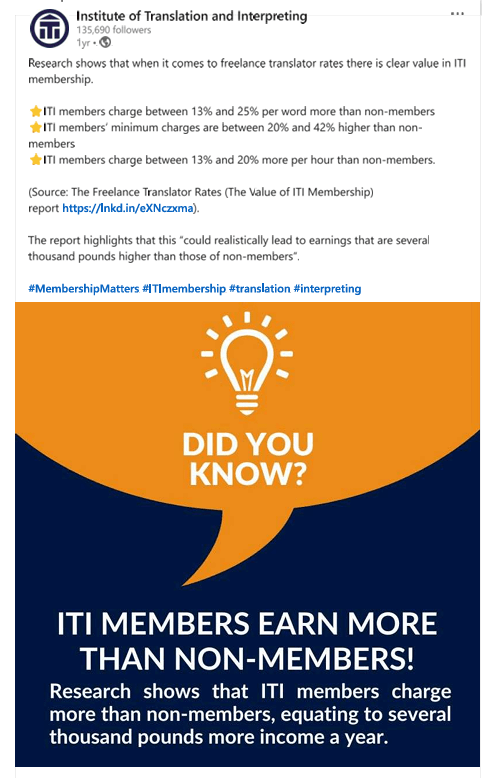
Figure 6.1: LinkedIn post by the ITI publicising the rates research and claiming a “clear value in ITI membership” rather than a mere “correlation” (2024).
This represents a contextually important example of industry collaboration that went awry. Collaborations between researchers and industry stakeholders can inadvertently reinforce structural pressures. The example underscores the importance of maintaining critical distance and reflexivity when presenting research tied to the industry.
Perhaps most ironic of all is that Lambert and Walker, in their seminal work Because We Are Worth It (discussed earlier), clearly critique translators’ associations for the costs of membership, applications, assessments, and training, noting that these
often become prohibitively expensive, serving as a barrier to entry for many, and potentially raising the spectre of tensions between association profit and added value to translators. Indeed, there is a palpable irony in associations’ generating significant income from event fees charged to translators who, they acknowledge, are poorly paid and have limited business acumen, requiring these translators to pay for the privilege of finding out why they are underpaid and struggling to make ends meet (Lambert & Walker, 2022, p.15).
It seems that Lambert and Walker are now engaging in a similar practice they previously critiqued, by contributing academic research for ITI marketing purposes, as well as by speaking at an upcoming event organised by the ITI (ITI, 2025), effectively charging translators for the “privilege of finding out why they are underpaid and struggling to make ends meet.”
Another controversial issue in the Handbook appears in Chapter 20, which adopts a narrow definition of professionalism by categorising translators who do not hold a formal university degree in translation as “non-professional.” This is problematic because, as discussed in Section 5, a substantial proportion of translators globally do not hold translation degrees, and evidence shows that formal education in translation is not the only pathway to acquiring professional translation competencies (Risky, 2016). Within a handbook that actively promotes a market-oriented narrative, the designation of any non-commercial translation as non-professional becomes particularly concerning. This framing implicitly equates professionalism with market participation and paid labour, thereby reproducing a narrow, economistic definition of professional value.
It also ignores the structural realities that determine who is permitted to earn an income in the first place. In the UK, for example, many asylum seekers are legally prohibited from working under policies administered by the UK Home Office. This restriction constitutes a systemic injustice in its own right, as it denies individuals the right to economic participation regardless of skill, experience, or social contribution. To then categorise translation or interpreting work undertaken by these individuals as non-professional compounds this injustice by conflating legal exclusion with lack of competence, legitimacy, or expertise. It obscures the political and legal structures that prevent certain groups from engaging in paid work, while simultaneously reinforcing a hierarchy in which market access becomes the primary marker of professionalism.
The choice of the term non-professional raises broader epistemic concerns: it may be interpreted as an instance of academic overreach, in which classification frameworks position themselves as authoritative arbiters of professional legitimacy, despite the heterogeneity of professional trajectories within the field. Such categorisations risk reifying exclusionary norms and attaching an implicitly derogatory label to practitioners whose expertise does not conform to institutionalised academic or market-based criteria.
Another concern is the discussion around social media, where translators are encouraged to work as “influencers” to supplement low pay. This suggestion risks normalising a vicious cycle of precarity: translators already facing unstable work may be more likely to spend time online, both for income-generating purposes and to market themselves, which constitutes yet another form of unpaid labour —a concern highlighted by Standing (2021). By framing social media use as a professional strategy without acknowledging the structural pressures that make it necessary, the Handbook misses an opportunity to critically interrogate the economic realities of contemporary translation work.
Similarly, the chapter on portfolio careers presents the patchwork of jobs that translators may undertake to earn a living in overly positive terms, in contrast to Standing’s (2021) observations on the prevalence of precarious workers who are compelled to combine multiple jobs. While some of the additional roles undertaken by translators may reflect personal interests, the need to rely on multiple income streams to compensate for the instability and inadequacy of translation pay aligns with broader precarious labour strategies. In such contexts, workers navigate fragmented, insecure, and often underpaid positions across sectors, typically without adequate protections, continuity, or predictable career progression (Standing, 2021).
This broader pattern points to a recurring dissonance across the Handbook: empirical findings are frequently included, only for the conclusions to retreat into recommendations that appear to contradict those findings. A clear example can be found in Chapter 30, “Employability and Translator Education.” Yu Hao acknowledges that employability is increasingly understood not as a static snapshot of employment, but as “a whole set of knowledge and literacies that enable people to secure and sustain gainful employment throughout their professional lives” (496). She also notes companies’ reluctance to invest in on-the-job training and highlights that many translation studies graduates do not go on to work as freelance translators for large translation companies.
Crucially, the chapter reports survey findings showing that many students’ motivations for enrolling in translation programmes are not aligned with entry into the industry at all. As Hao observes,
quite a few of our Chinese international students in Melbourne were not motivated to become professional translators; rather, they had enrolled to receive a postgraduate degree from a prestigious university, to live in an English-speaking country, to gain a cosmopolitan view of the world, and, in a few cases, to find the opportunity to “stand on their own two feet”… (p506).
These empirical findings raise serious questions about the assumptions underpinning employability discourse in Translation Studies. Yet, despite this evidence, the chapter ultimately returns to a familiar recommendation: closer collaboration with industry. It is difficult to speculate about the reasons for such contradictions, whether they stem from academic self-censorship, editorial expectations, or broader disciplinary pressures to align research outputs with industry interests.
Similarly, Chapter 29, Pedagogical Frameworks and Competences, illustrates the same contradiction: although it cites empirical evidence showing that few graduates secure stable translation work, the chapter frames this as a pedagogical issue rather than a structural labour-market problem. The solution is presented as aligning curricula with industry demands. This shifts responsibility from structural conditions onto students and universities, reinforcing an individualised, neoliberal employability narrative.
Technological competences are treated in the same way, emphasising continuous adaptation and digital literacy. This framing risks normalising unpaid learning, deskilling through automation, and intensified competition—hallmarks of precarious labour regimes where risk is transferred from institutions to workers. The chapter’s recommendation to involve industry professionals in curriculum design assumes these actors are neutral arbiters of competence, by stating that
It is important to consider that the main characteristics of the professional translation industry in the 21st century have certainly compelled translators to enhance their skills and abilities in order to remain in the volatile and competitive market (Wu et al., 2019). Consequently, translator training programmes should be in accordance with the needs of the society and market (p.490).
the chapter presents market demands as the primary justification for curriculum design. This displaces responsibility from industry actors and policymakers onto students and educators, normalising precarious conditions and equating professional survival with individual adaptability. It conflates educational relevance with labour-market justice, leaving structural causes of precarity unaddressed and individualising responsibility rather than promoting collective or institutional reform.
A similar logic appears in Chapter 15, Translation Management Systems, where universities are positioned as agents of labour market alignment rather than as spaces for critical interrogation of technological and economic change. This orientation is evident in the assertion that:
The primary objective is to teach more important – fundamental – skills, like language, culture, translation techniques, and transversal – personal and interpersonal – skills, including teaching introductions to the labour market, open-mindedness, flexibility, and proactiveness in whatever they do. Teaching future translators and translation PMs [project managers] to not only be critical but also open-minded in ‘befriending’ and accepting artificial intelligence technologies arguably lies among the responsibilities of universities (p.261).
Taken together, these passages promote a depoliticised, neoliberal model of translator education. They treat skills as self-evidently “fundamental” without interrogating who defines their value, individualise responsibility through an emphasis on adaptability and openness, and present the labour market as a neutral horizon rather than a site of power and inequality. As Joseph Stiglitz argues in The Road to Freedom (2024), framing the role of educational institutions through neoliberal logics risks the further erosion of fundamental rights and freedoms, prioritising corporate advantage and wealth accumulation over social justice and democratic accountability. Additionally, the framing of AI as something to be “befriended” reinforces technological inevitability and constrains critique by privileging acceptance over ethical, social, and labour-based interrogation. Ultimately, universities are positioned as facilitators of market and technological adjustment rather than as institutions capable of fostering structural critique, collective agency, and resistance to exploitative industry norms.
A particularly troubling aspect of the Handbook is its repeated framing of internships as “opportunities” for gaining “real-world” experience. Nowhere, however, does it engage with the potential harms of promoting internships uncritically, nor does it address the risk that such arrangements may function as forms of unpaid or underpaid labour for translation companies. Internships are one of the most contested areas in labour economics, precisely because they raise fundamental questions about who is working for free, what they receive in return, and how unpaid placements exert downward pressure on waged labour.
These concerns are especially acute in the translation industry, where opportunities for stable and sustainable careers are increasingly limited. In such a context, academic scholars have a heightened responsibility to approach internships with caution rather than endorsing them uncritically. Yet the Handbook mentions internships 25 times, consistently in positive terms. The absence of any critical engagement with their labour implications is deeply concerning and gives the impression that dissenting or critical perspectives have been excluded altogether.
This omission is particularly striking given the Handbook’s repeated emphasis on “critical thinking” as a core skill that students should acquire. While the term appears 22 times throughout the volume, there are remarkably few substantive examples of how criticality is exercised in discussions of the translation industry itself. The result is a disjuncture between the Handbook’s stated pedagogical aims and the largely uncritical treatment of industry practices that shape translators’ working lives.
An honorary mention is due to Minna Ruokonen and Elin Svahn for their review of translation research, which explicitly recognises power asymmetries, the non-neutrality of research, and the legitimacy of critical and activist approaches. Compared with more overtly industry-aligned chapters in the Handbook, this section does feel more balanced and reflexive. However, the scope of critique ultimately remains constrained by an overriding concern with maintaining industry access and collaboration. As a result, structural economic inequalities are acknowledged but not fully confronted. The chapter’s repeated emphasis on collaboration reproduces a central tension of the Handbook as a whole. Critical research is recognised as valuable, yet it is ultimately folded back into a consensus-oriented framework that prioritises dialogue, access, and stakeholder inclusion. Absent is any sustained engagement with adversarial, redistributive, or rights-based approaches, such as collective bargaining, regulation, or public-interest governance.
Across the Handbook, chapters repeatedly call for industry collaboration in a largely uncritical way, to an extent that it sometimes reads like an echo chamber or risking an overly simplistic perspective. Overall, the Handbook remains largely descriptive, missing opportunities to challenge the structural conditions that drive precarity in the translation industry. Throughout the Handbook, the engagement with decent work, diversity, and ethics is largely symbolic rather than substantive. It normalises existing industry practices, side-lines advocacy, and leaves readers without guidance on how to challenge structural inequities in the translation industry. In some chapters, it risks treating industry narratives as objective truth, fails to critically evaluate datafication and surveillance, legitimises dominant perspectives, adopts managerial discourses that obscure power and responsibility, and encourages academia–industry collaboration without sufficient critical boundaries.
7. Toward a Mission-Oriented Translation Industry Studies: Ethics, Pedagogy, and Industry Collaboration
Drawing on Mariana Mazzucato’s mission-oriented framework (2021), a genuinely mission-oriented subfield of the translation industry studies would begin by explicitly defining its central mission as improving the job quality of translators and interpreters. This is not a normative aspiration imposed from outside the field, but a necessity grounded in empirical evidence produced by the field itself. The forthcoming job quality research by Lambert and Walker, along side Penet, documents persistently poor working conditions in the industry, including low and unstable pay and insecurity (forthcoming). A mission-oriented subfield of translation industry studies should foreground this evidence and therefore reframe ethics and sustainability not as matters of individual conduct or professional resilience, but as collective, structural obligations.
At its core, translation ethics should articulate a clear boundary condition “thou shalt not exploit!” making explicit that business models dependent on insecurity, unpaid labour, or chronic underpayment are ethically indefensible. Likewise, sustainability must be defined not as the endurance or growth of translation companies, nor as translators’ capacity to cope, retrain, or self-care, but as the industry’s ability to ensure that all those who work in the translation industry can secure a stable livelihood. Such a reframing would shift the analytical focus away from what translators should do to survive or adapt and instead pose the more politically and ethically urgent questions: what are translation companies doing, what should they be doing, and how must industry structures change to uphold the principle of decent work and sustainable enterprise, as outlined by the ILO (2007). Without this shift, discussions of ethics and sustainability risk becoming rhetorical devices that obscure responsibility rather than instruments for transforming the material conditions of translation labour.
The pioneering work on job quality by Lambert, Walker, and Penet (forthcoming) could serve to scrutinise the industry and guide mission-oriented efforts for change. Instead of normalising precarious conditions, emphasising individual resilience, “love for the profession,” or alignment with market imperatives, research should pivot toward critical inquiry into structural inequalities.
I am proposing a framework for mission-oriented Translation Industry Studies, grounded in the principles of ethical responsibility, sustainability, and the public purpose of research, education, and professional engagement. Drawing on Mazzucato (2021) and critical political economy perspectives, such a field of study would provide guidance for industry collaboration and pedagogy, with the explicit goal of improving job quality and supporting fair, sustainable work for translators.
Education in translation and interpreting should equip students not merely with technical competencies, but with analytical tools to understand how markets are structured, how value is extracted, and how inequality is produced and normalised within the industry. This includes examining procurement systems, outsourcing models, platformisation, monopolistic contract arrangements, ownership of technology, and the distribution of risks and rewards between companies and workers. Without such critical grounding, pedagogical frameworks risk reproducing what Mazzucato identifies as a narrow, market-following logic, where education is subordinated to existing power structures rather than shaping alternative futures.
In contrast to pedagogical models that prioritise “employability,” “industry readiness,” or rapid adaptation to technological change, a mission-oriented approach would foreground students’ rights as citizens and future workers. This entails teaching students to question whose interests are served by prevailing business models, how ethical claims are mobilised by industry actors, and why responsibility for poor working conditions is so often displaced onto individuals rather than companies. Rather than framing success as resilience, entrepreneurialism, or personal branding, pedagogy should encourage collective thinking about standards, regulation, solidarity, ownership and accountability.
Crucially, the role of academia in this framework is not to act as a neutral broker between industry and labour, nor as a talent pipeline calibrated to employer demand, but as an institution with a public responsibility to challenge exploitation and expand the boundaries of what is considered possible and legitimate within the industry. This requires maintaining critical distance from corporate narratives, resisting capture by industry agendas, and safeguarding the autonomy of research and teaching. Collaboration with industry, where it occurs, must therefore be conditional, transparent, and subordinated to clearly articulated ethical commitments, rather than treated as an unquestioned good.
Pedagogy that merely trains students to “fit” the industry as it currently exists ultimately entrenches the very problems it claims to address. By contrast, a mission-oriented pedagogical approach would prepare students to understand, critique, and collectively challenge unjust structures—positioning education not as a mechanism of adaptation, but as a site of ethical intervention and social transformation within the translation industry.
8. Conclusion
In the end, my argument is straightforward: when academic work becomes intertwined with the interests of powerful industry actors, the risk is that research stops challenging structural inequalities and instead becomes a source of reputational polish for those contributing to them. This is why it remains crucial for scholarship to ask uncomfortable but necessary questions – such as who is responsible for the ongoing deterioration in translators’ working conditions and who is profiting from it.
Lambert and Walker deserve credit for helping to put pay and job quality on the agenda—topics that have long been overlooked in translation studies. However, their venture into translation industry studies, represents a methodological failure with grave ethical consequences: by ignoring interdisciplinary insights from labour economics and neoliberalism critique, it produces analytically shallow work that normalises deteriorated job quality, vanishing financial security, legitimises industry priorities, and obscures structural exclusion, demonstrating that translation studies cannot study markets in isolation without reinforcing the inequalities it purports to examine.
For genuine progress, we need mission-oriented research that remains independent, critically engaged, and willing to scrutinise vested interests—not research that inadvertently echoes their promotional narratives.
Note: This article was written in a personal capacity, in good faith, and in the public interest. Its purpose is to critically examine systemic challenges and potential misalignments between academia and industry, grounded in evidence and established theories. The critique is not aimed at individual authors or editors, but at structures, practices, and institutional choices that shape translators’ realities. It was updated to clarify its purpose and scope.
Appendices
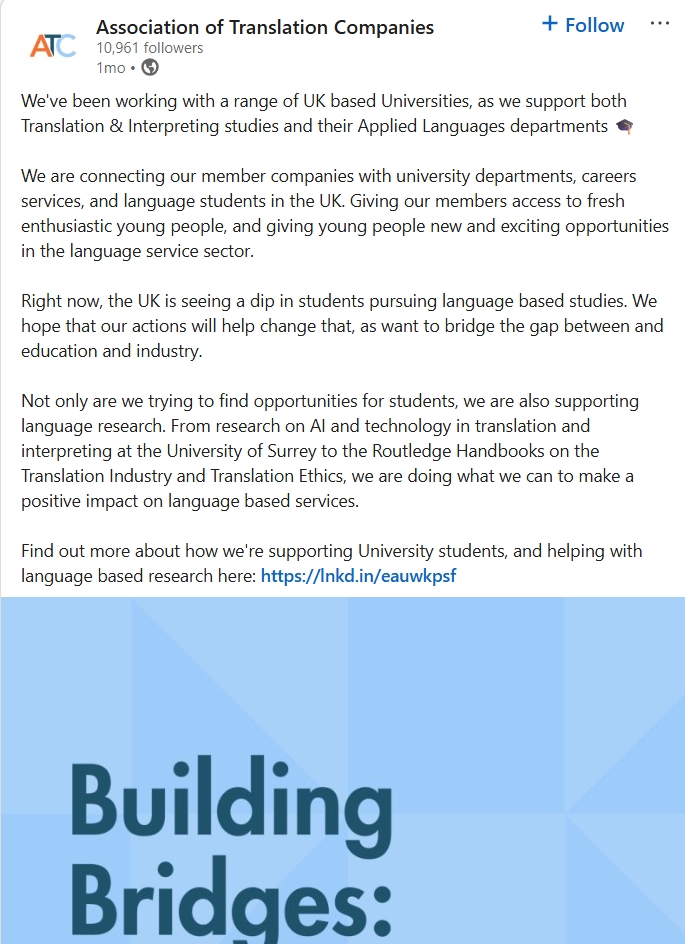
Appendix 1: ATC’s post on LinkedIn claiming support for Lambert’s and Walker’s publications (ATC, 2025a).
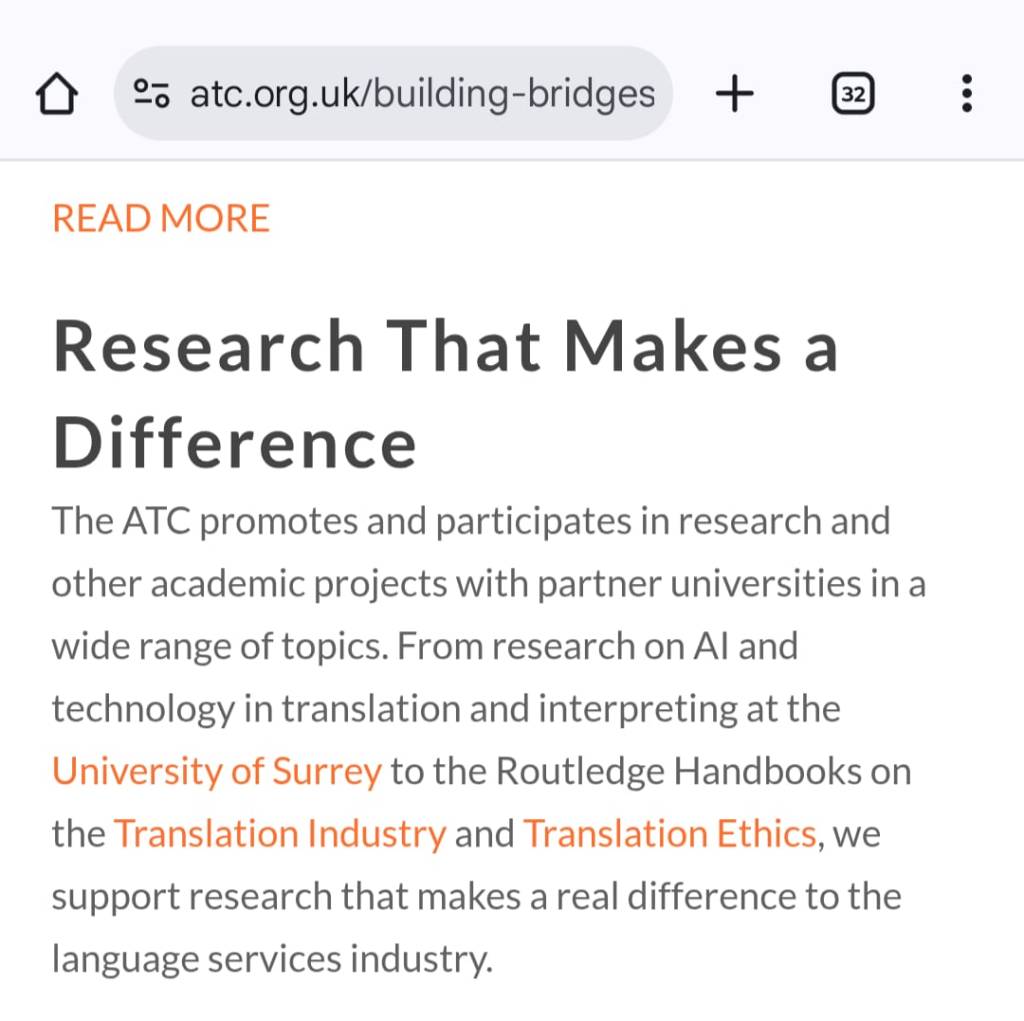
Appendix 2: ATC’s Website claiming promotion of and participation in research and academic projects and including hyper links to Lambert’s and Walker’s Publications (ATC, 2025b).
Bibliography
Ahmed, S. 2012. On being included: racism and diversity in institutional life. Durham; London: Duke University Press.
APTIC. n.d. Founded in 2017… Accessed 3 January 2026. Home | aptis
APTIS. 2025. Living with AI: From disruption to direction in translation and interpreting. Accessed 3 January 2026. APTIS 2026 (Cardiff University & Swansea University) — APTIS – Association of Programmes in Translation and Interpreting Studies
Association Excellence Awards. 2023. EQUALITY, DIVERSITY & INCLUSION CHAMPION. Accesses 04 January 2026. EQUALITY, DIVERSITY & INCLUSION CHAMPION – The Association Excellence Awards 2025
ATC. n.d. University Partners: Internships, careers and industry knowledge-sharing. Accessed 12 December 2025. University Partners | Association of Translation Companies
ATC, 2025a. Not only are we trying to find opportunities for students, we are also supporting language research…. Linkedin. Accessed 21 December 2025. https://www.linkedin.com/posts/association-of-translation-companies_weve-been-working-with-a-range-of-uk-based-activity-7396895372511686656-BnOY?utm_source=share&utm_medium=member_desktop&rcm=ACoAAADnCBsBeIGaEjttEK8wazG2iwGrFP4ZIZY
ATC. 2025b. Building Bridges: ATC-University Collaborations. Accessed 20 December 2025. Building Bridges: ATC-University Collaborations – The Association of Translation Companies
ATC. 2025c. END OF YEAR Report 2025. Acessed 3 January 2026. ATC End of Year Report 2025
ATC and Nimdzi. 2021. UK language services industry survey and report. Accessed 24 November 2023.https://atc.org.uk/wp-content/uploads/2018/06/ATC-UK-Survey-and-Report_2021.pdf
ATC and PI4J. 2023. Working together: recommendations for tackling the immediate issues facing procurement and provision of language services for the public sector. Accessed 27 July 2024. https://www.nrpsi.org.uk/downloads/231120-UK-Language-Services-for-the-Public-Sector-Working-Together.pdf
Bahbouh, F. 2025a. Talent Pipelines or Precarity Pipelines? Setting the Narrative Straight on the UK Language Industry. Accessed 14 December 2025. Talent Pipelines or Precarity Pipelines? Setting the Narrative Straight on the UK Language Industry – Lingua Media Connect
Bahbouh, F. 2025b. Ethical Tensions and Power Asymmetries in Industry–Academic Collaboration: A Reflexive Account. Accessed 14 December 2025. https://linguamediaconnect.com/2025/12/14/ethical-tensions-and-power-asymmetries-in-industry-academic-collaboration-a-reflexive-account/
BBC File on 4. 2023. “Lost in Translation.” Accessed 21 November 2023. https://www.bbc.co.uk/sounds/play/m001sm8z
Cappelli, P. 2012. Why good people can’t get jobs : the skills gap and what companies can do about it. Philadelphia, PA: Wharton Digital Press.
Chan, A. 2010. Perceived benefits of translator certification to stakeholders in the translation profession: a survey of vendor managers. Across Languages and Cultures. 11(1), pp.93-113.
CSA research. 2020. The State of the Linguist Supply Chain. Accessed 22 November 2025. https://insights.csa-research.com/reportaction/305013106/Toc?searchTerms=State%20of%20the%20Linguistic%20Supply%20Chain%202020
Daghigh, A.J. and Shuttleworth, M. eds. 2024. Translation and neoliberalism. Cham: Springer.
Dinisman, T., Moroz, A., Anastassiou, A. and Lynall, A. 2022. Language barriers in the criminal justice system. Accessed 30 March 2024. https://www.victimsupport.org.uk/wp-content/uploads/2022/04/Language-barriers-in-cjs_The-experience-of-victims-and-witnesses-who-speak-ESL.pdf
Folbre, N. 2021. The Rise and Decline of Patriarchal Systems: An Intersectional Political Economy. Verso.
Harvey, D. (2005). A Brief History of Neoliberalism. Oxford: Oxford University Press.
Huws, U. 2014. Labor in the Global Digital Economy: The Cybertariat Comes of Age. Monthly Review Press.
International Labour Organisation. 2007. The promotion of sustainable
enterprises. accessed 22 November 2025. Microsoft Word – ILC96-VI-2006-12-0129-1-En.doc
ITI, 2024. Research shows that when it comes to freelance translator rates there is clear value in ITI membership… Linkedin. Accessed 03 January 2026. https://www.linkedin.com/posts/institute-of-translation-and-interpreting_membershipmatters-itimembership-translation-activity-7219263477498990592-0GLf?utm_source=share&utm_medium=member_desktop&rcm=ACoAAADnCBsBeIGaEjttEK8wazG2iwGrFP4ZIZY
ITI, 2025. Industry vs profession? Accessed 4 January 2026. London Regional Group: Industry vs profession?
Lambert, J. 2023. Ethics and Sustainability: The Translator’s Perspective. Accessed 17 September 2025. https://www.linkedin.com/pulse/ethical-business-blog-association-of-translation-compani/
Lambert, J. and Walker, C. 2022. Because We’re Worth It: Disentangling freelance translation, status, and rate-setting in the United Kingdom. Translation Spaces. 11(2), pp.277-302.
Lambert, J. and Walker, C. 2024. Thriving or Surviving: Motivation, Satisfaction, and Existential Sustainability in the Translation Profession. Finnish Association of Translators and Interpreters (SKTL).
Lambert, J. and Walker, C. eds. 2025. The Routledge Handbook of the Translation Industry. New York: Routledge.
Li, L. 2025. The vicious circle: how systemic barriers perpetuate maternity interpreting service inadequacies for migrant women in the UK. Front. Glob. Women’s Health. 6:1638434. doi: 10.3389/fgwh.2025.1638434
Mazzucato, M. 2021. Mission Economy: A moonshot guide to changing capitalism. Allen Lane.
Moorkens, J. 2017. Under pressure: Translation in times of austerity. Perspectives. 25(3), pp.464–477.
Moorkens, J. 2020. Translation in the Neoliberal Era. In: Bielsa, E. and Kapsaskis, D. eds.The Routledge Handbook of Translation and Globalization. Abingdon: Routledge, 323-336.
Risku, H. 2016. Situated learning in translation research training: Academic research as a reflection of practice. The Interpreter and Translator Trainer, 10(1), 12–28. https://doi.org/10.1080/1750399X.2016.1154340
Risku, H., & Schlager, M. 2024. Contextualising translation expertise: Lived practice and social construction. Translation Cognition & Behavior 6(2), 230-251.
Rowntree, M. 2024. Hear me. Royal College of Midwifery. Accessed 12 August 2024 https://www.nrpsi.org.uk/downloads/49-53-Maria-research_v5.pdf
Standing, G. 2021. The Precariat: The New Dangerous Class (Special Covid-19 Edition). London: Bloomsbury.
Stiglitz, J. 2024. The Road to Freedom: Economics and the Good Society. Penguin Books Limited.
Walker, C. Ivins, C. and Lambert, J. (2024) Freelance Translator Rates: The Value of ITI Membership. Report. Institute of Translation and Interpreting
Warren, T. and Lyonette, C. 2015. The quality of part-time work. In: Felstead, A., Gallie, D. and Green, F. eds. Unequal Britain at work. Oxford: Oxford University Press.
Weeks, K. (2011). The Problem with Work: Feminism, Marxism, Antiwork Politics, and Postwork Imaginaries. Durham, NC: Duke University Press.
 Lingua Media Connect
Leave a comment